

After building the same project across 7 no-code platforms and comparing each against Glide's pricing, features, and scaling limits, here are the best Glide alternatives worth switching to in 2026.
Why Teams Are Looking for Glide Alternatives
Teams are switching from Glide mainly because of high per-user pricing, update limits, and limited design flexibility. These issues make it hard to scale or customize business apps beyond the prototype stage.
Here's where Glide falls short:
- Pricing gets expensive fast. Glide's Business plan starts at $249/month with 30 users included, then $10/month per additional user. A customer portal with 200 users costs $1,949/month for one app.
- Update limits create surprise bills. Glide charges $0.02 per update beyond your plan's 5,000/month limit. Every sync with Google Sheets or Airtable burns an update, and the workaround (using Glide's proprietary tables) locks your data into their ecosystem.
- PWAs only, no native apps. Glide builds Progressive Web Apps, not native mobile apps. You can't publish to the App Store or Google Play, which is a dealbreaker for anything customer-facing.
- Design flexibility is limited. No pixel-level control, restricted font options, no text overlays or shadowing. If you need something that matches your brand exactly, you'll hit walls fast.
None of this makes Glide a bad product. It’s great at what it does: fast, spreadsheet-powered internal apps. But if your project has outgrown those constraints, here are the alternatives worth considering.
Quick Comparison: Glide vs Top Alternatives
TL;DR: Which Glide Alternative Should You Choose?
Choose Zite if you want unlimited users and apps without per-seat pricing, and you'd rather describe what you need than drag and drop it. Not ideal if you need native mobile apps or have complex Glide Tables you'd need to migrate.
Choose Softr if your data already lives in Airtable, Notion, or HubSpot and you just need a clean frontend on top.
Choose Bubble if you need full design control and complex workflows, and you're willing to invest the time to learn a steeper platform.
Choose Adalo if you need a native app published to the App Store or Google Play without writing code.
Stick with Glide if you're building simple internal tools for small teams (under 30 users), you like the spreadsheet-first approach, and your apps don't need heavy customization or app store publishing.
1. Zite: Best for AI-Powered Business Apps Without Per-User Pricing

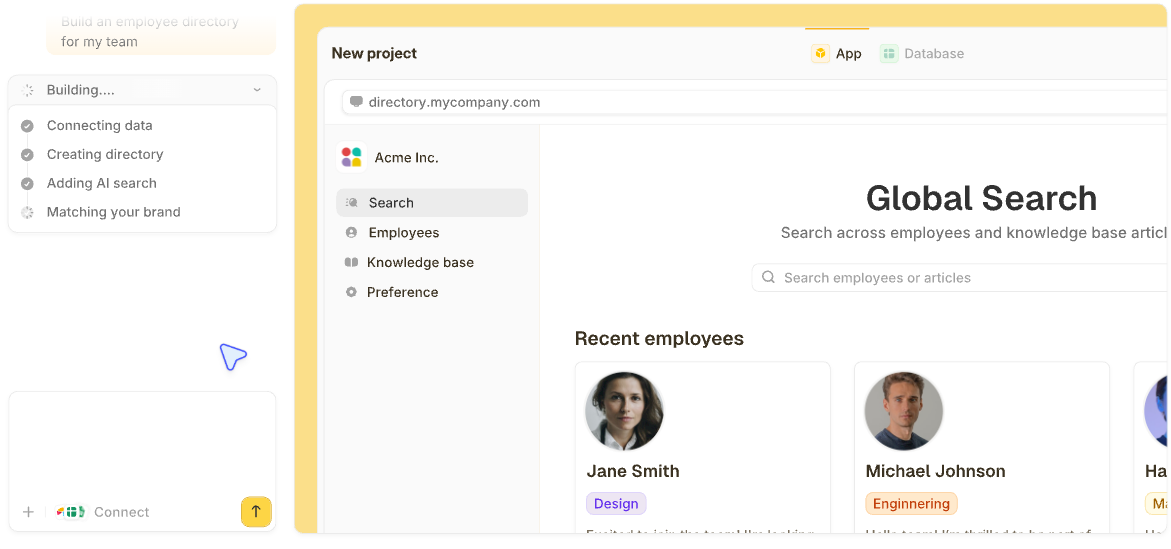
What it is: Zite is an AI-powered no-code platform that lets you build custom business software (databases, apps, dashboards, portals, workflows) by describing what you want in plain language.
Where it beats Glide:
- Describe what you want, get a working app. You skip the learning curve of a complicated drag-and-drop builder entirely. Type what the app needs to do, and Zite generates a working version with database, interface, and logic together.
For teams coming from Glide's template-first flow, this is the fastest path from idea to something usable.
- Visual workflows you can actually inspect. The app's logic shows up as a flowchart your team can read and adjust, so you are not hoping the AI got it right, you can see exactly what it built. If a workflow breaks, you can trace where and fix it in place.
- A visible, manageable database. Zite includes a built-in database (up to 250,000 records on Business) that looks like a spreadsheet but runs at SQL speed. Your data stays visible and editable rather than hiding inside the app, and you can also connect Airtable or Google Sheets if that fits better.
- No per-seat pricing. Every plan (including the free tier) includes unlimited users and unlimited apps. Glide charges $10/month per user after the first 30 on its Business plan, so a portal with 200 users adds nearly $1,700/month on top of the base price. Zite's flat rate stays flat.
- Brand-matched interfaces without the template lock. Zite generates custom interfaces from your description rather than pinning you to a template. You get custom domains, your own colors and fonts, and the option to build customer-facing tools.
- Production-grade foundations. SOC 2 Type II compliance with SSO, audit logs, and 256-bit AES encryption available on higher-tier plans.
Where Glide still wins:
- If you've already built complex apps using Glide Tables and computed columns, migrating takes effort. Glide's 400+ template library is also larger if you prefer starting with a pre-built layout.
- Zite uses a credit-based system for AI generation (100 credits/month on Pro, 200 on Business). Manual edits don't use credits, but heavy AI prompting can burn through your monthly allowance.
Best for: Ops teams, support teams, and SMB owners (10-250 employees) building internal tools, customer portals, CRMs, inventory trackers, dashboards, and workflow automations. Over 100,000 teams use the platform, including Domino’s, The Athletic, and Fairfax County government.
Zite vs Glide comparison:
2. Softr: Best for Airtable-Heavy Teams That Need Quick Portals
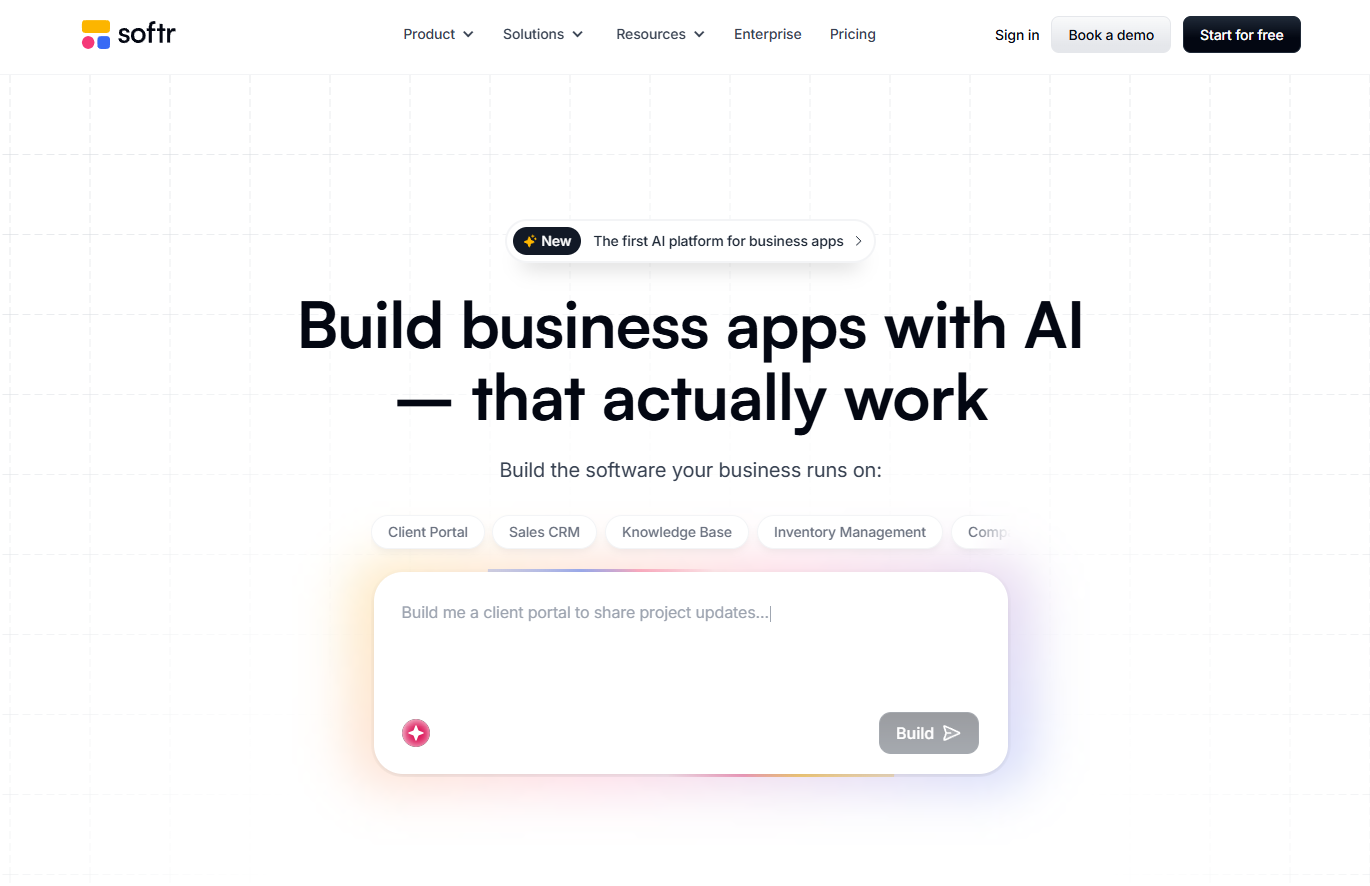
What it is: A no-code platform that turns existing databases (Airtable, Google Sheets, Notion, HubSpot, SQL) into web apps and client portals.
Where it beats Glide:
- 15+ native data source connections, far more than Glide's four (Google Sheets, Airtable, Excel, Glide Tables). If your team already lives in Notion or HubSpot, Softr pulls data directly without workarounds.
- Server-side permissions, not client-side like Glide. That matters for any app handling sensitive client or partner data.
- Usage-based pricing that scales more predictably than Glide's per-user model.
Where it falls short:
- Softr does not include its own database. You need to bring one from an external tool. Starting from scratch means setting up Airtable or another source first.
- Zite and Glide both include built-in databases, which provide a smoother experience for teams starting fresh.
Pricing: Free tier available. Paid plans start at $59/month (Basic, billed monthly), with Professional at $167/month and Business at $323/month.
Best for: Teams already managing data in Airtable, Notion, or HubSpot who need a frontend fast.
3. Bubble: Best for Complex Web Apps With Full Design Control
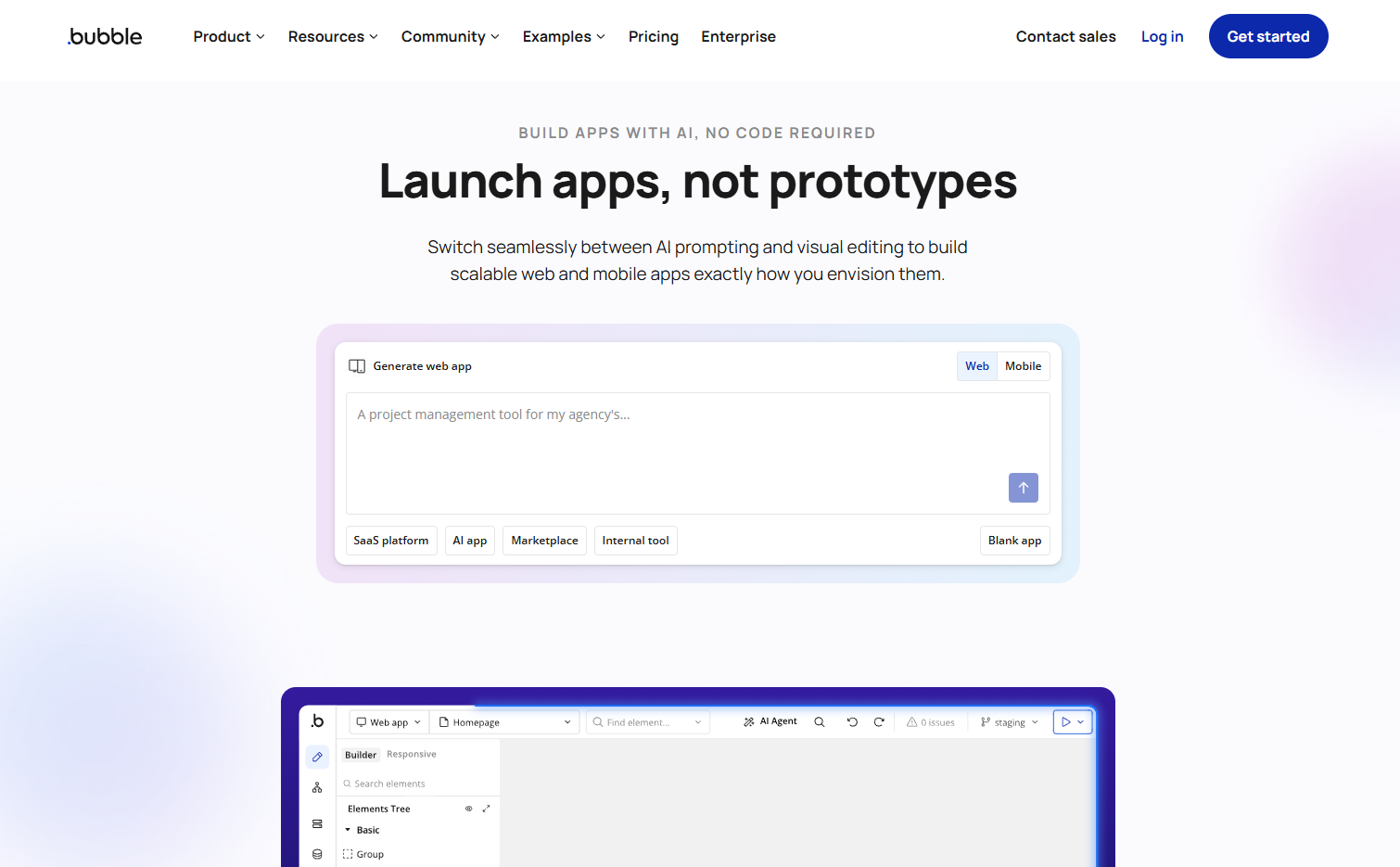
What it is: One of the most powerful no-code platforms available. Bubble gives you complete control over design, data, and workflows, though native mobile apps require external wrappers or add-ons.
Where it beats Glide:
- Real relational database with proper relationships, not a spreadsheet pretending to be one.
- Event-driven workflows that trigger conditionally and chain together for complex logic.
- Massive plugin marketplace with Stripe payments, SendGrid emails, Google Maps, and hundreds of other integrations. For complex SaaS products, marketplaces, or multi-step workflows, Bubble handles what Glide can't.
Where it falls short:
- The learning curve is steep. A Glide app takes hours to build; the equivalent Bubble app can take days or weeks. For simple internal tools, it's overkill.
- More expensive at scale. Production-ready apps require paid plans starting at $32/month for Web apps only, and costs climb with usage and Workload Unit overages.
Best for: Builders comfortable with a steeper learning curve who need full flexibility and don't mind investing more time upfront.
4. Adalo: Best for Native Mobile Apps Published to App Stores
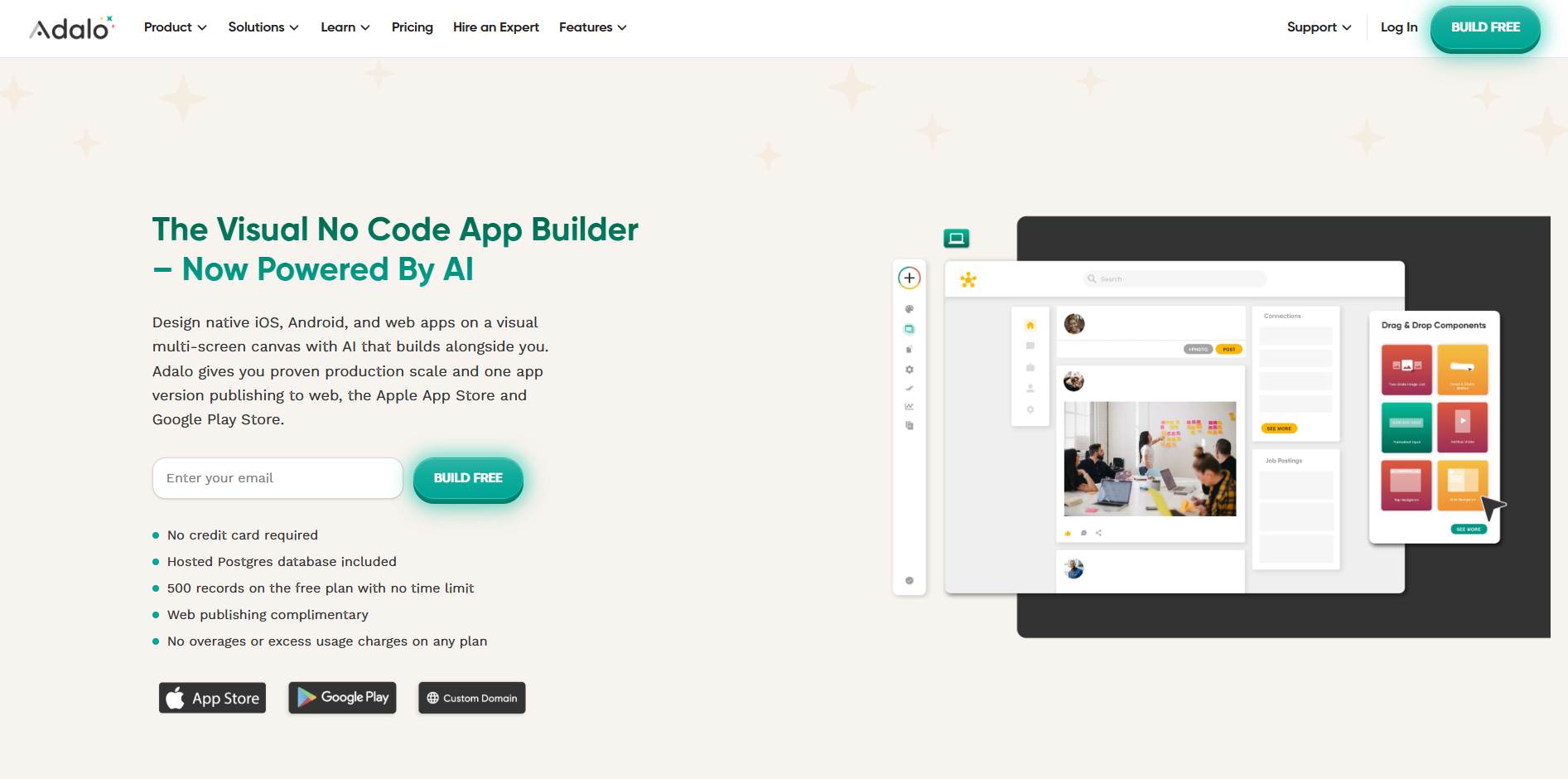
What it is: A no-code platform specifically designed to build native iOS and Android apps from a single codebase.
Where it beats Glide:
- App store publishing directly to iOS and Android. Glide only builds PWAs, so this is the clear winner if you need your app in the App Store or Google Play.
- Native device features like push notifications, offline functionality, and barcode scanning.
- Simpler pricing starting at $45/month with unlimited database records and no usage-based charges.
Where it falls short:
- Adalo is mobile-first, which means desktop experiences aren't its strength. If you're building web-first internal tools, it's not the right fit.
- Performance can lag with larger apps or complex logic.
Best for: Teams building customer-facing mobile apps, field tools that need offline access, or any project that requires app store publishing.
5. AppSheet: Best for Google Workspace Teams
What it is: Google's own no-code app builder, deeply integrated with Google Sheets, Drive, and the rest of the Google Workspace ecosystem.
Where it beats Glide:
- Direct connections to Google Sheets, BigQuery, and Cloud SQL without extra configuration.
- Google-backed infrastructure, so scalability isn't a concern.
- Cheaper for small teams at $5/user/month for Core and $10 for Enterprise.
Where it falls short:
- The interface feels dated compared to Glide or Zite. Don't expect to build something visually impressive.
- There's a noticeable learning curve for anything beyond basic CRUD apps.
Best for: Organizations deep in the Google ecosystem who prioritize data integration over design.
6. FlutterFlow: Best for Visual App Building With an Exit Option
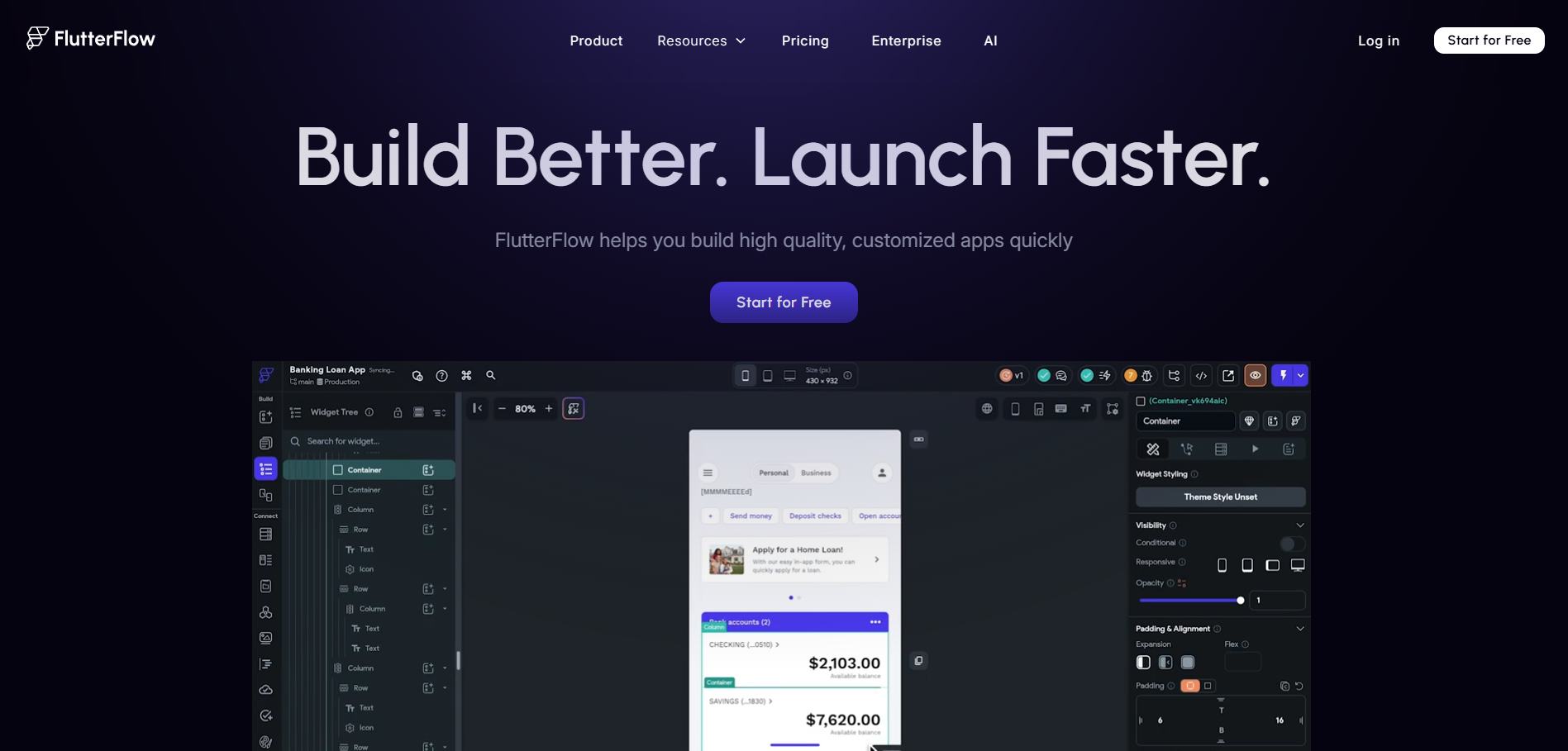
What it is: A visual development platform built on Google's Flutter framework. Higher-tier plans let you export real source code, so you're not locked into the platform long-term.
Where it beats Glide:
- Native mobile apps for iOS and Android plus web apps, all from a single codebase.
- Pixel-level layout customization, custom animations, and full access to Flutter's widget library.
- Code export on paid plans lets you deploy anywhere and hand off to developers if you outgrow the visual builder.
Where it falls short:
- This is closer to visual programming than true no-code. You'll need to understand state management, API calls, and data models.
- Code export starts on the Basic plan ($15.60/month, billed monthly), but advanced collaboration and store publishing features push you to higher tiers.
Best for: Teams with some technical ability who want design flexibility across mobile and web, with the option to export code and leave the platform if needed.
7. Retool: Best for Developer-Led Internal Tool Building
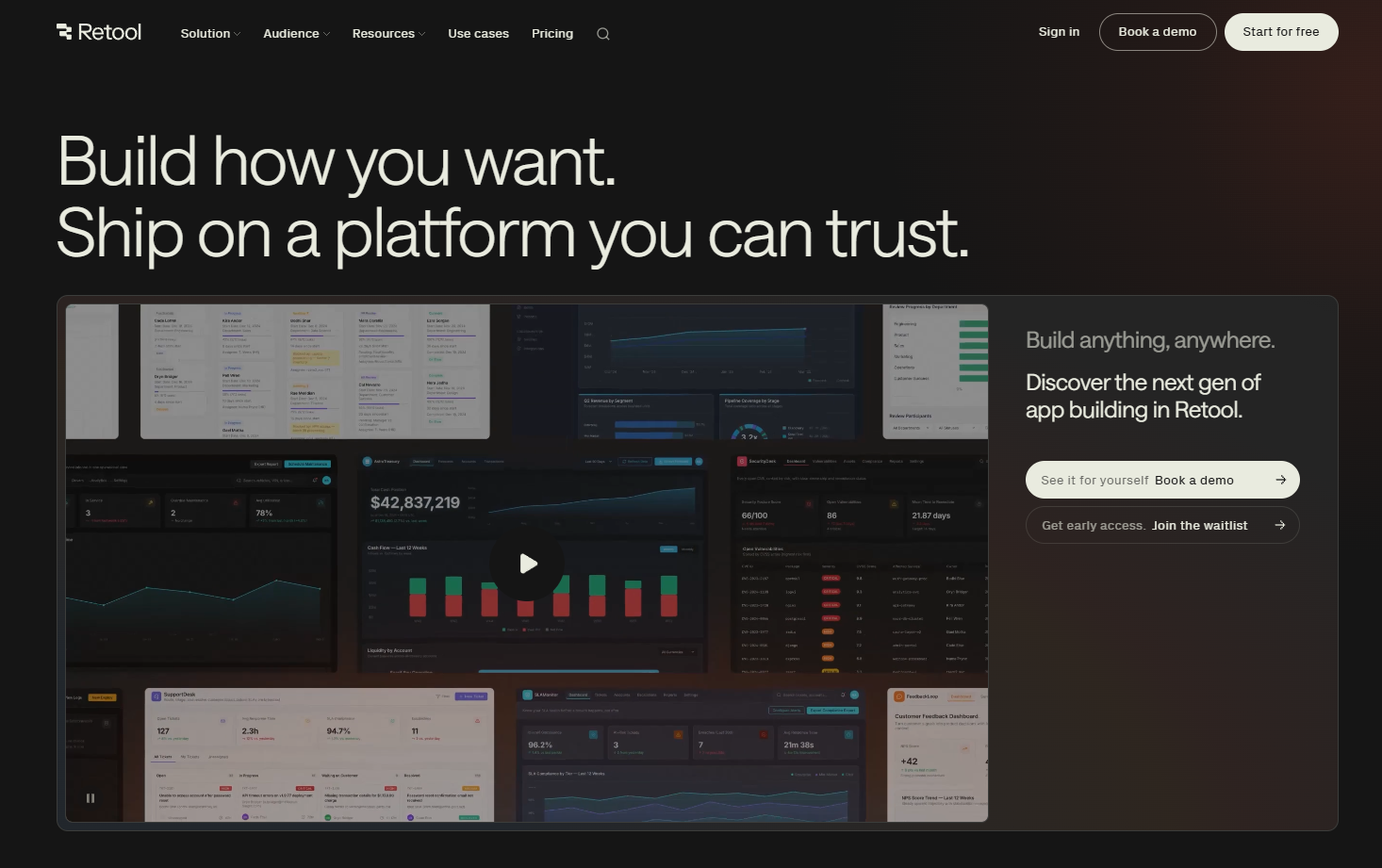
What it is: An internal tool builder designed for developers who want to build admin panels, dashboards, and back-office apps quickly.
Where it beats Glide:
- Connects to practically any database or API (PostgreSQL, MongoDB, REST APIs, GraphQL). Retool sits on top of your existing infrastructure.
- Far more powerful for complex data operations, queries, and workflows than Glide's spreadsheet-based approach.
Where it falls short:
- Built for developers, not ops teams or non-technical users. If you can't write a SQL query, Retool isn't for you.
- Pricing gets steep at $12/builder/month & $7/internal user/month on the Business plan after the free tier's limits are reached.
Best for: Engineering teams building internal tools on top of existing databases and APIs.
How to Choose the Right Glide Alternative
The right tool depends on what specifically pushed you to look for a Glide alternative.
If pricing is the main issue, Zite offers the most immediate savings, with unlimited users on all plans starting at $19/month (billed monthly). For teams past the 30-user mark on Glide, the cost difference often reaches hundreds or thousands per month.
If you need native mobile apps: Adalo or FlutterFlow. Adalo is simpler and handles publishing for you. FlutterFlow gives you more control and code ownership.
If you already have data in Airtable, Notion, or HubSpot: Softr connects to those sources directly and builds frontends fast.
If you need complex logic and full design control, use Bubble for web apps and FlutterFlow for mobile.
If your team is technical and works with existing databases, Retool is the right fit.
If you want the easiest transition from Glide's simplicity, Zite's AI-powered approach is closest to "describe what you need, get a working app," and it does so without the per-user pricing or update limits that made Glide expensive.
Bottom Line
Glide's spreadsheet-to-app approach still works for quick prototypes and simple internal tools. The no-code space has moved fast, though, and alternatives now offer better pricing, more flexibility, and fewer scaling headaches.
For most business teams evaluating Glide alternatives in 2026, the decision comes down to use case and budget. Start with what you are building, check whether the platform handles your data sources, and do the pricing math for your real user count, not the base plan price.
Frequently Asked Questions About Glide Alternatives
What is the best free alternative to Glide?
The best free alternative to Glide is Zite, which includes unlimited users, unlimited apps, and 5,000 database records on its free tier. AppSheet is another option for teams already on Google Workspace, though most business use cases will require a paid plan.
Can I build native mobile apps with a Glide alternative?
Yes, Adalo and FlutterFlow both compile to native iOS and Android code and publish directly to the App Store and Google Play.
Why are people switching from Glide?
The most common reasons are pricing at scale, update limits, and design restrictions. Glide's Business plan costs $249/month (billed monthly) plus $10/user above the first 30, and limited layout customization and proprietary data tables add to the frustration.
Is Glide good for enterprise use?
Glide works for enterprise internal tools with smaller user counts, offering SSO, SOC 2 Type II compliance, and SQL data sources on its Enterprise plan (custom pricing). Teams with hundreds of users often find per-user pricing restrictive compared to alternatives like Zite, which includes unlimited users on every plan.
What is the main difference between Glide and Zite?
The main difference is how apps are created and priced. Glide uses a drag-and-drop builder with per-user pricing, while Zite generates apps from plain-language descriptions with unlimited users. Zite Business runs $69/month compared to Glide Business at $249/month plus per-user fees above 30.