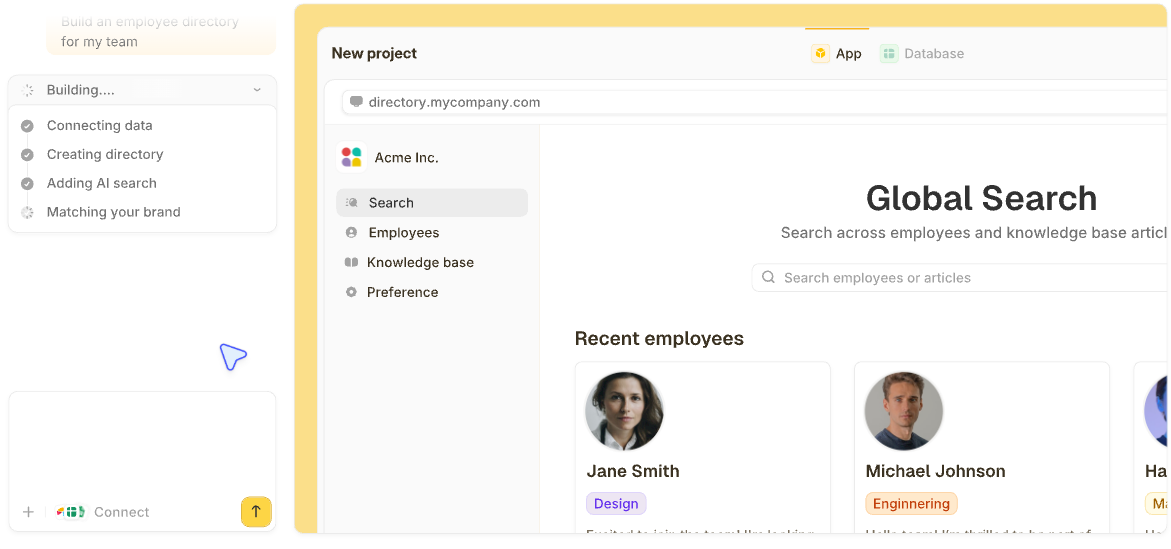


Missed approvals, lost emails, and spreadsheets nobody trusts. That's what workflow automation replaces. This guide covers what workflow automation is, how it works across HR, security, and finance, and a pilot playbook to get your first one live.
What Is Workflow Automation?
Workflow automation is software that runs the steps of a repeatable business process whenever a trigger fires, following rules you define. It removes manual handoffs, enforces consistent decisions, and logs every outcome for audit and reporting.
Here's what that looks like in practice:
- Definition. Software that watches for a specific event, applies decision rules, performs actions across your tools, and records every outcome.
- Who it's for. Operations teams, HR, finance, IT, security, and support teams that deal with repeatable, rule-based processes.
- What it replaces. Manual handoffs, copy-paste between tools, email chains for approvals, and spreadsheet-based tracking.
- Where it falls short. Tasks that require constant human judgment with no stable decision rules. Also gets brittle when exception handling is an afterthought.
How Does Workflow Automation Work?
Workflow automation takes a business process you'd normally run by hand and encodes each step, decision, and handoff into software. Once set up, the automation watches for a specific event, pulls the data it needs, makes decisions based on your rules, and performs actions across your tools. Every step gets logged.
The workflow lifecycle looks like this:
- Trigger detection. The system watches for a specific event. That could be a form submission, a file upload, a scheduled time, or an alert from a monitoring tool.
- Context gathering. The workflow pulls relevant data from connected systems. For example, when a timesheet comes in, the automation grabs the employee's project budget and billable rate from your HR and finance tools.
- Decision rules. Conditional checks determine the path. If submitted hours exceed the project budget, the system flags the submission for a manager. If validation passes, the flow moves forward.
- Action execution. The system performs the work. That might mean updating a CRM record, sending a Slack notification, creating a billing entry, or connecting to another tool.
- Exception handling. If something fails, the workflow retries, notifies the process owner, or routes the case to a human. This is where most poorly built automations break down.
- Outcome logging. Every decision, action, and exception is recorded. This gives you an audit trail and the data to measure process performance over time.
A Real Example
A timesheet approval flow starts when an employee submits hours. The automation validates those hours against project budgets pulled from the finance system. If hours exceed the budget, the system flags the submission and routes it to a manager for review.
If validation passes, the automation updates the payroll input file and emails the employee a confirmation. Every decision and action is logged, providing HR with a complete audit trail at the end of each pay period. No spreadsheet. No email chains. No missed approvals sitting in someone's inbox for two days.
Tools like Zite make this kind of flow easier to set up because the workflow logic is generated from a plain-language prompt and then displayed as a visual flowchart. Instead of reading through code or configuration files, you can inspect every decision branch and trace what happened on any given run.
Key Capabilities of Workflow Automation Software
Not all workflow automation tools are created equal. But the ones worth considering share these capabilities.
Workflow Automation vs. RPA and BPM
These three get lumped together constantly, but they solve different problems. Here's how they break down.
When to pick each one. Use workflow automation when your stack supports integrations, and you want durable, auditable flows. Use RPA only when you're stuck with systems that have no API. And look at BPM frameworks when you need enterprise-wide process governance across dozens of teams and hundreds of workflows.
What I Liked and Didn't Like About Workflow Automation
What works well
- Consistent outcomes. Automations apply the same rules every time. I've seen payroll error rates drop by over 60% in organizations that automated timesheet validation. The system doesn't have a bad Monday or skip a step because it's 4:55 PM on a Friday.
- Faster cycle times. Approvals that used to sit in someone's inbox for a day or two now complete in minutes. In one finance team I worked with, invoice routing went from a 3-day average to under 4 hours after automation.
- Visibility into what's actually happening. Good automation tools give you dashboards showing where processes slow down, where exceptions cluster, and where you should focus next. This kind of process intelligence barely exists in manual workflows.
- Reusable patterns. Once you build one approval workflow, you can template it. Teams I've worked with scaled from one pilot automation to twenty-plus within a quarter by reusing connectors and decision logic.
Where it falls short
- Edge-case complexity. If your process generates exceptions more often than it follows the happy path, automation can become fragile fast. I've seen teams build automations that required more upkeep than the manual process they replaced. Invest in exception handling from day one.
- Governance debt. Without clear ownership and version control, automations multiply and become impossible to look after. One company I audited had 140+ automations, and nobody could confidently say which ones were still active or accurate.
Real-World Use Cases
Workflow automation works best when you have a high-volume, repeatable process with clear rules. Below are six use cases I've seen deliver measurable results.
HR onboarding
Automation gathers signed documents, requests IT accounts, assigns a buddy, and schedules orientation sessions. One mid-size company I worked with cut new-hire time-to-productivity from four days to same-day for all routine onboarding tasks. The biggest win wasn't speed. It was that nothing got missed.
For teams without developers, Zite can generate an onboarding workflow from a prompt, store employee records in its built-in database, and control access through role-based permissions so only HR sees sensitive data.
Invoice routing and processing
Optical character recognition (OCR) extracts invoice data, validates it against purchase orders, and routes exceptions to the right finance team member. Days-to-pay dropped significantly in every implementation I've seen, and late payment fees practically disappeared.
According to Ardent Partners, the average cost of processing a single invoice manually is around $9.40. AI-powered automation can bring that down to about $2.36.
Security incident triage
Alerts auto-enrich with asset data and user context, then the automation creates tickets and runs containment scripts for known threat patterns. Mean time to respond (MTTR) drops, and analyst workload shifts from repetitive triage to actual investigation. This is where automation directly reduces risk, not just cost.
Sales lead routing
Leads get enriched with firmographic data and assigned to reps based on territory, deal size, and product interest. Response times tighten, and conversion rates go up because leads land with the right person faster. One team I advised went from a 6-hour average response time to under 20 minutes.
Support ticket escalation
Tickets with urgent keywords auto-prioritize and route directly to subject matter experts. SLA breach rates fall because the right tickets reach the right people without human triage for every incoming request. The automation also tags and categorizes tickets, providing support leads with better data for staffing decisions.
IT provisioning
Resource requests trigger approval chains, then provisioning scripts spin up the resources and notify the requester. Provisioning time shrinks from days to hours, and audit trails improve because every approval and action is recorded. For regulated industries, this alone can justify the investment.
How to Run Your First Workflow Automation Pilot
The fastest way to prove value is a focused pilot. I've run these across different industries, and the structure that works best follows six steps.
- Pick the right process. Choose something high-volume, repetitive, and owned by a single person or team. Good candidates include timesheet approvals, invoice routing, or alert triage. Avoid poorly documented processes or those with dozens of exception paths.
- Define success metrics. Choose two or three KPIs. Cycle time, error rate, number of manual handoffs, or cost per transaction all work well. Measure the baseline before you start building.
- Map the full workflow. Document every step, the happy path, and every exception path. Note data inputs, decision points, and who acts on exceptions. If you skip this step, you'll discover gaps in production.
- Choose and configure the tool. Match the platform to your integrations, scalability needs, and team skill set. For teams without developers, Zite is worth evaluating because it generates workflows from your prompts and displays the logic as a visual flowchart you can inspect and troubleshoot without reading any code.
- Test with real data. Validate edge cases and failure modes. Include human-in-the-loop tests for the exceptions you mapped in step three. Don't test only with clean data.
- Roll out in stages. Start with a small team. Measure results against your baseline. Refine the logic based on what you learn, then expand to more teams or processes.
Pilot checklist
- Owner identified and signed off.
- Baseline KPIs recorded before automation.
- Full process map with every exception path documented.
- Tool selected and connectors verified against your stack.
- Test plan using real production data.
- Rollout plan with training and support for end users.
- Monitoring dashboard and incident process set up before go-live.
Benefits and ROI Examples
Workflow automation reduces costs, speeds up cycle times, and provides process-level visibility that manual workflows can't. Below are two worked ROI examples you can adapt with your own numbers.
Example A. Timesheet approval (annual savings)
- Setup. 500 employees, biweekly pay periods (26 per year).
- Manual cost. 5 minutes per review. That's 65,000 minutes (1,083 hours) per year.
- Automated cost. System validates in 0.5 minutes per timesheet. Roughly 1 in 100 timesheets still needs 10 minutes of manual review. Total automated time is about 130 hours per year.
- Savings. 953 hours saved. At $50/hour fully loaded, that's $47,650 per year. Add intangible gains from fewer payroll corrections and faster reporting.
Example B. Security incident triage (per-incident value)
- Before automation. 8-hour mean time to respond (MTTR) for high-severity incidents.
- After automation. 3-hour MTTR. The automation handles enrichment, ticket creation, and initial containment.
- Value per incident. At $2,000/hour for downtime costs, each incident saves $10,000. Multiply by your annual incident count for total impact.
Swap in your own rates and volumes. The math doesn't have to be perfect. The point is to give leadership a concrete number they can compare against the cost of the tool and implementation time.
Best Practices for Workflow Automation
After building and auditing automations across different industries, these are the practices that separate the automations that last from the ones that get abandoned.
Design for observability from day one
Include logging, dashboards, and alerting before your automation goes live. Most teams add monitoring after something breaks in production. By then, you've already lost trust in the stakeholders who approved the pilot. Build it in from the start.
Assign a single process owner
Every automation should have one person responsible for keeping the logic current, fixing breakages, and approving changes. When ownership is shared or unclear, nobody updates the workflow when business rules change. It rots quietly.
Treat workflows as living assets
Write down what each workflow does, who owns it, and which business rules it depends on. Test changes in a separate copy of the workflow before rolling them out to live use, and keep an easy way to undo if something breaks. Teams that skip this end up with "don't touch it, nobody knows how it works" automations within six months.
Common mistakes to avoid
- Automating a broken process. Fix the process first. If the manual version is a mess, the automated version will just be a faster mess.
- Ignoring exception paths. Plan human-in-the-loop handling for edge cases. Automations that only handle the happy path look good in demos and fail in production.
- Skipping testing with messy data. Real-world data has gaps, duplicates, and weird formatting. Test with it.
Should You Use Workflow Automation?
Workflow automation pays off fastest when it replaces repetitive, rule-based work that causes delays or errors. If your process has stable rules, runs frequently, and involves handoffs between people or systems, it's a strong candidate.
Workflow automation is a good fit for
- HR. Onboarding, timesheet approvals, personnel changes, and offboarding.
- Security. Alert enrichment, incident triage, and initial containment steps.
- Finance. Invoice routing, purchase approvals, reconciliations, and expense reporting.
- Support and sales. Ticket routing, lead assignments, and SLA tracking.
- IT operations. Provisioning workflows, change approvals, and access requests.
If you're evaluating tools for any of these use cases, see how Zite compares to Lovable, Base44, and Replit for building workflow-driven business apps without code.
Skip it if
- Your tasks need continuous human judgment with no stable decision rules.
- You depend entirely on systems you can't connect to and have no plan to modernize. RPA might bridge the gap temporarily, but plan to move to integration-based automation down the road.
Vendor Snapshot
The market for workflow automation tools is broad. Below is a snapshot of the platforms I'd consider depending on team size, technical depth, and what you're trying to automate.
For teams that already use Airtable or similar tools, Zite is worth evaluating because it generates workflows from natural-language prompts and displays the app logic as a visual flowchart you can inspect, understand, and troubleshoot. You can also see how it compares to Lovable, Base44, and Replit for building workflow-driven apps.
A general rule. Use low-code tools for quick departmental wins. Choose enterprise platforms when you need cross-company orchestration or heavy compliance requirements. Use RPA selectively and only for systems without API access.
My Verdict
Workflow automation is one of the clearest ways to free people from repetitive tasks and improve process reliability. The organizations that get the most value from it share a few traits. They start small, measure outcomes against real baselines, assign clear ownership, and scale with reusable patterns.
For teams building workflow-driven apps without dedicated developers, platforms like Zite make it possible to go from an idea to a working automation with a built-in database and visual workflow logic you can actually inspect. Start with a free account and build your first pilot workflow.
Ready to try Zite?
If you’re curious how Zite helps automate workflows for teams, the simplest way is to try it yourself. The free plan includes unlimited apps and users, no credit card required.
Frequently Asked Questions
What is the difference between workflow automation and RPA?
The main difference between workflow automation and RPA is how they connect to systems. Workflow automation models business logic and connects systems through APIs. RPA automates user-interface actions by mimicking clicks and keystrokes, which makes it useful when APIs aren't available but more fragile in the long term.
What are common examples of workflow automation?
Common examples include timesheet approvals, invoice routing, employee onboarding, security incident triage, sales lead assignment, and IT resource provisioning. Each involves a repeatable process with defined rules and handoffs between people or systems.
How much does workflow automation cost?
Workflow automation costs vary by platform and scale. No-code tools like Zapier or Zite offer free or low-cost plans under $20/month, while enterprise platforms involve larger licensing and implementation fees. Factor in ongoing maintenance and governance when estimating the total cost of ownership.
How long does it take to implement a workflow?
Implementing workflow automation can take anywhere from days to months. Simple automations can go live in days, while complex cross-system workflows with multiple exception paths typically take weeks to months, depending on integration depth, testing requirements, and governance setup.
Which process should I automate first?
The best process to automate first is one that's high-volume, rule-based, and causes visible delays or errors. It should have a clear owner, measurable KPIs, and well-documented steps. Timesheet approvals and invoice routing are popular starting points because they're repetitive and the ROI is easy to quantify.
Can workflow automation improve compliance?
Yes, workflow automation can improve compliance by consistently enforcing rules across all executions and creating audit logs that document every decision and action. This speeds up compliance reviews and reduces the risk of human error in regulated processes.
Will workflow automation replace employees?
No, workflow automation is not designed to replace employees. It eliminates repetitive tasks, allowing teams to focus on work that requires judgment and creativity. Some roles may evolve as automation handles more routine processes, but most organizations see a rebalancing of responsibilities rather than a reduction in headcount.