Powering Public Health and Saving Six Figures a Year
How Montgomery County became an AI leader in public health with Zite.
“We stopped treating technology as a barrier and started treating it as a partner.”
Background: From carbon-copy to real-time data
When Sara Boerenko arrived at Montgomery County's Mental Health Department in 2015, she came from a hospital world of swipe cards and electronic medical records. The county world she inherited looked very different:
- No electronic systems for core workflows
- Triplicate carbon-copy pads for messages and forms
- Handwritten patient charts, rabies certificates, and logs
- Manual tracking of everything from animal vaccinations to program referrals
In 2017, public health and mental health merged, and Sara became Director of the combined department. Around three years ago, the department brought in MetroIQ to help modernize operations. Through that partnership, the team adopted Fillout for digital forms and structured data intake, and Zite for AI-generated, staff-managed websites and dashboards.
Program Coordinator Erin Vanvalkenburgh joined the department from another county agency, where she had worked with “dinosaur” systems and legacy software. After her first no-code session, she quickly became the internal builder for Zite & Fillout.
“Every message was on carbon copy. Every form was carbon copy. It took me back to a time I hadn't even really lived through.”
The Challenge
Montgomery County faced the same pressures as larger urban health departments, with far fewer resources:
- All-paper workflows: clinical notes, rabies clinics, resource guides, housing/lead, SPOA, opioid funding
- Constantly changing state requirements that demanded quick shifts in data collection and reporting
- A loss of local reproductive health providers and the closure of Planned Parenthood, leaving a gap in sexual health access
- A 70-page PDF resource guide that took six months to build and was outdated the day it came back from the print shop
- Rabies clinics that processed only 50–55 animals in three hours, with long lines and frustrated residents
- New state mandates requiring transparent dashboards and applications for opioid settlement funds
All of this while serving approximately 50,000 residents — including 7,300+ K–12 students — with virtually no dedicated IT or in-house developers.
The department needed a way to:
- Move off paper without buying a seven-figure EMR
- Let non-technical staff build and change tools themselves
- Launch programs in days, not months
- Generate real-time data that could stand up to state-level scrutiny
Solution: Zite as the operating system for public health
Sara's team began using Fillout by Zite as the backbone for any process that involved capturing data, and Zite as the public-facing layer for sites, portals, and dashboards.
“If we can do it on paper, we can do it in Fillout. If it needs to be public, we put it in Zite.”
Building an "Amazon for public health": The Montgomery County Health Store
The turning point came when the county lost its last clinic able to provide condoms, contraceptives, and reproductive health counseling, followed by the closure of their local Planned Parenthood. Where that clinic once distributed ~15,000 condoms per year, now there was nothing.
Sara's answer was simple and radical: “Let's build Amazon for public health.”
Using Fillout + Zite, the team launched the Montgomery County Health Store:
- A public Zite site that lists 50+ free health items, including Narcan kits, same-sex reproductive kits, condoms, pregnancy tests, and menstrual products
- A Fillout-powered order form that captures resident details, lets people order multiple items in a single request, and feeds structured data into dashboards for reporting and funding
When repeat users started complaining about re-entering their information, Sara asked whether the form could be updated. It took about seven minutes to change the form so residents could order multiple items in one go. Within 15–20 minutes of publishing, people started requesting multiple items for themselves and their families.
Impact
- ≈350 orders per month flowing through the Health Store
- Narcan and harm reduction supplies going directly to homes
- Fatal overdoses dropping from 15–21 per year to 7–9 per year over the last two years
- STD and teen pregnancy rates staying at manageable levels despite provider closures
“It took less time to change the form than to brew a cup of coffee in my Keurig.”
Rabies clinics: From chaos to throughput
Rabies clinics were a perfect microcosm of the county's problems. Before digitization, intake was entirely paper-based. Residents filled out forms at crowded tables with agitated pets. Nurses manually wrote out data for each animal. Average throughput was 50–55 animals in a 3-hour clinic, and staff ended the day with sore hands and incomplete data.
After Fillout + Zite
- A Zite site for rabies clinics with clinic info and a Fillout registration form
- Residents can pre-register from home or scan a QR code on arrival and fill out the form on their phone
- Staff can help residents fill out the form on the spot, print rabies certificates on site, and maintain a digital record for each pet
At a clinic in St. Johnsville — a very rural area where the team expected resistance to technology — ~120 animals were processed in a single clinic. Many residents went back to their cars to complete the form on their phones, then returned to the line ready to vaccinate.
Throughput went from 50–55 animals per clinic to 97–114+ in the same 3-hour window.
“If an 80-year-old woman with two cats can use a Fillout form, anybody can.”
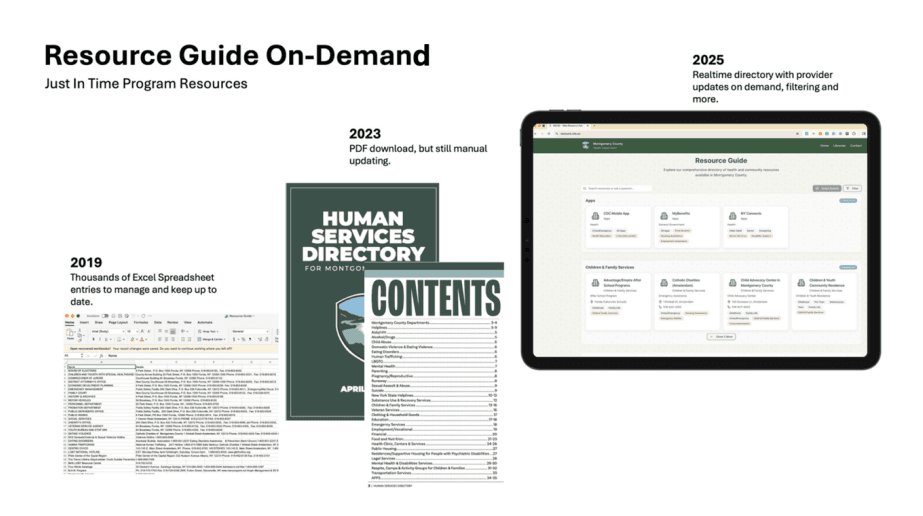
Turning a 70-page PDF into a living community resource
For years, the county relied on a 70-page printed resource guide listing services, providers, and programs. It started as a 75-page Excel spreadsheet created over six months, sent to the print shop, and returned as a beautiful booklet — but the day it was printed, key contact info was already outdated.
Using Zite and Fillout, Erin rebuilt the entire thing as a searchable, AI-assisted online directory:
- Residents can search by category (mental health, food, housing, transportation, etc.)
- They can talk to the guide, saying things like: “I need a primary care doctor in St. Johnsville”
- The site responds with local, relevant resources
- The directory is updated continuously instead of every few years
“I spent six months on that guide and the day it came back from print, parts of it were wrong. I wanted to lose my mind.”
Teen health: A safe, county-backed space built in hours
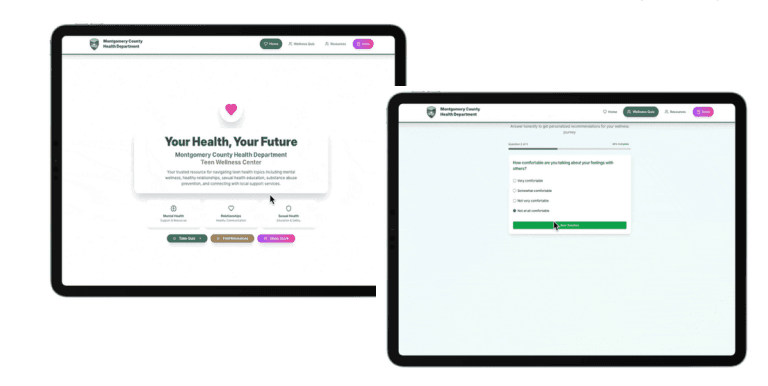
The department recognized a gap: there was no dedicated space for teens to get trustworthy information about mental health, relationships, physical activity, menstruation, and sexual health. Schools were reducing health education, and many parents weren't discussing these topics at home.
Using Zite, Erin built a Teen Health site by speaking out loud to Zite (using voice input on her MacBook) describing what she wanted. The site incorporated flip-card navigation, embedded video from a prior county youth project, and links to local resources teens can access directly.
The first version took Erin about an hour when she was brand new to Zite. Today, she regularly builds two complete program sites in about 20 minutes before a leadership meeting.
Opioid settlement transparency in less than a day
When a new state requirement dropped requiring counties to publish detailed dashboards and streamlined applications for all opioid settlement dollars, Sara and Erin responded with a Zite + Fillout workflow:
- Sara consolidated existing spreadsheets using an AI writing assistant into a clean narrative
- Erin built a Zite dashboard in a few hours showing spending by domain and funding source
- Erin then built a Fillout RFP/application form that maps each funding request to the correct state-defined domains and feeds directly into the dashboard for real-time reporting
All of that — the dashboard and a compliant application process — was built in under one working day.
Bringing SPOA in-house and retiring nine filing cabinets
SPOA (Single Point of Access) is the county's hub for connecting residents to specialized mental health and community services. Before, the process was outsourced to another agency, ran on paper applications and spreadsheets, and the managing office had nine floor-to-ceiling filing cabinets stuffed with records. The core application was a 10-page PDF.
Sara decided to bring SPOA home. With Erin and Zite/Fillout, the 10-page application became a 4–5 page, button-driven, dynamic form. A dedicated SPOA Zite site now serves as a single point of entry, separates adult and children pathways, and guides providers to the right information.
“People refuse to see that technology is an asset, not a burden. We insourced SPOA, retired nine filing cabinets, and now we process information in ways that other agencies simply can't match.”
Real-time births, deaths, and disease surveillance
The department also uses Fillout + Zite to track birth and death certificates. Nurses and staff input certificates through Fillout forms, and Zite dashboards give Sara a same-day view of how many residents have been born, how many have died, and trends in causes of death.
This real-time data allows Sara to argue for funding with stronger, fresher evidence, design programs based on current trends, and tell state agencies: “I have better data than you.”
“I know today how many people were born in Montgomery County. I know today how many people have died because of Zite and Fillout. I don't have to wait three years for state data.”
Financial impact
Montgomery County didn't just modernize — it did so within a small-county budget.
- ≈$2,000/month in paper and ink previously; orders dropped dramatically after digitization
- $30,000/year app for a barely used “Healthy Me” app was canceled (fewer than 30 people were using it, compared to ~350 monthly users of the Health Store)
- ≈$80,000/year saved by insourcing outsourced processes (like SPOA) and eliminating duplicative tools
- ≈$70,000 in new revenue/funding opened up by better data and stronger grant reporting
Total financial impact: ≈$150,000 per year in a county of only 50,000 people.
“In a small rural county, saving $80,000 and bringing in $70,000 in revenue turns heads. My legislators' eyes twinkle like Kris Kringle when they see those numbers.”
Empowering non-technical staff
One of the most important outcomes isn't a dashboard — it's a culture shift. Staff now say “We're not printing all this paper, we're just going to make a form.” Paper has become “almost a dirty word” in the department. Nurses and program staff feel ownership of their tools and processes. Technology is seen as an ally, not a threat.
“Before Zite, it would take me hours in other tools to build what we needed. Now I sit in front of my computer, talk to it, and the site is done in 20 minutes.”
Recognition & leadership
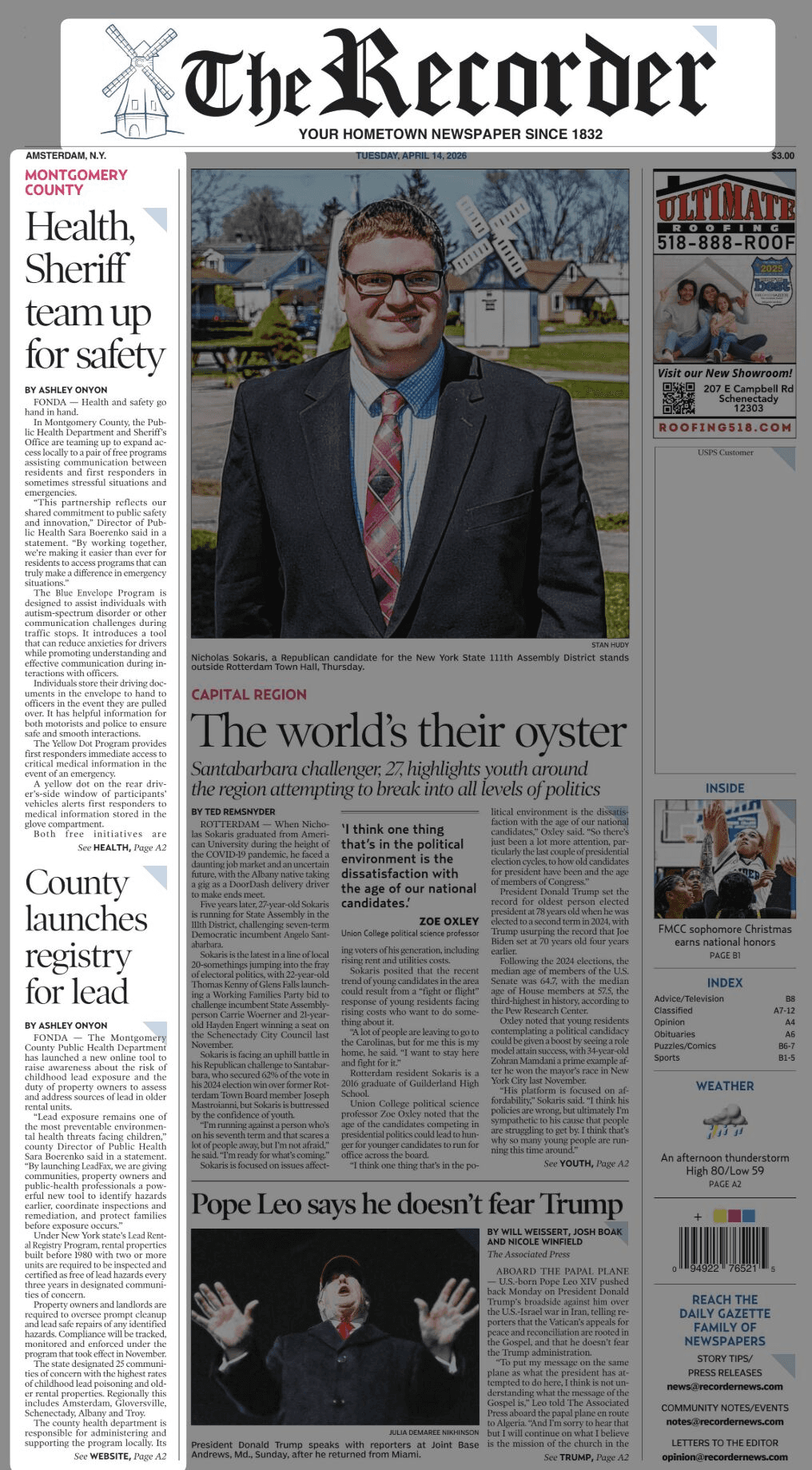
Montgomery County's transformation didn't stay quiet. The department was featured multiple times in local and regional news for practical, responsible use of AI. They were recognized by state health officials as an AI leader among rural counties, and Sara was appointed as the AI in Healthcare expert on the Governor's Health Equity Council.
“For a rural county to be called an AI leader by our state agency is huge. We got there by solving real problems, not chasing buzzwords.”
Looking ahead
Sara's vision for the next 2–3 years:
- Continue to replace remaining manual processes with Fillout workflows
- Use Zite to rapidly create new program-specific portals as grants and mandates change
- Expand public-facing tools like the Health Store, Teen Health, and Resource Directory
- Keep refining the department's data pipelines so they always know more about their county than any external report can tell them
“Zite and Fillout didn't just take us paperless. They told my staff, 'You can do this yourself.' That's what made us leaders.”
Zite for local government
See how health departments and county offices replace paper and costly vendor tools with software they build themselves.
Talk to our team