
How GiveDirectly gets emergency cash to disaster survivors within days, with Zite
After disasters in Madagascar, the Philippines and Venezuela, GiveDirectly used Zite to enroll, verify and pay nearly 6,400 recipients, bringing the median time to payment down to four days.
When speed decides who recovers
GiveDirectly sends money directly to people living in extreme poverty and to people whose lives have been upended by crisis, so they can decide for themselves what they need most. After a hurricane, flood, earthquake or conflict, that might mean food on the table, a roof back overhead, or a start on rebuilding.
Traditional aid often takes weeks or months to reach the people who need it. GiveDirectly's emergency cash moonshot is to close that gap: get money to survivors of any disaster, anywhere in the world, within five days. For GiveDirectly, speed matters because it can decide who recovers and who doesn't.
Yazmin Baptiste has spent six years at GiveDirectly. As a Technical Program Manager, she leads the technology behind its disaster responses: building the applications recipients fill out, connecting identity verification, and working out what it takes to get money into people's hands.
“With [Zite], we’ve really been brushing up against that five-day speed goal, which is important at GiveDirectly because we believe that delivering cash in a timely, efficient manner is important to the people we serve. It’s been so amazing to build a web form quickly, send it out to people and get them paid so they can buy the things they need after a disaster.”
Reaching survivors on the phones already in their pockets
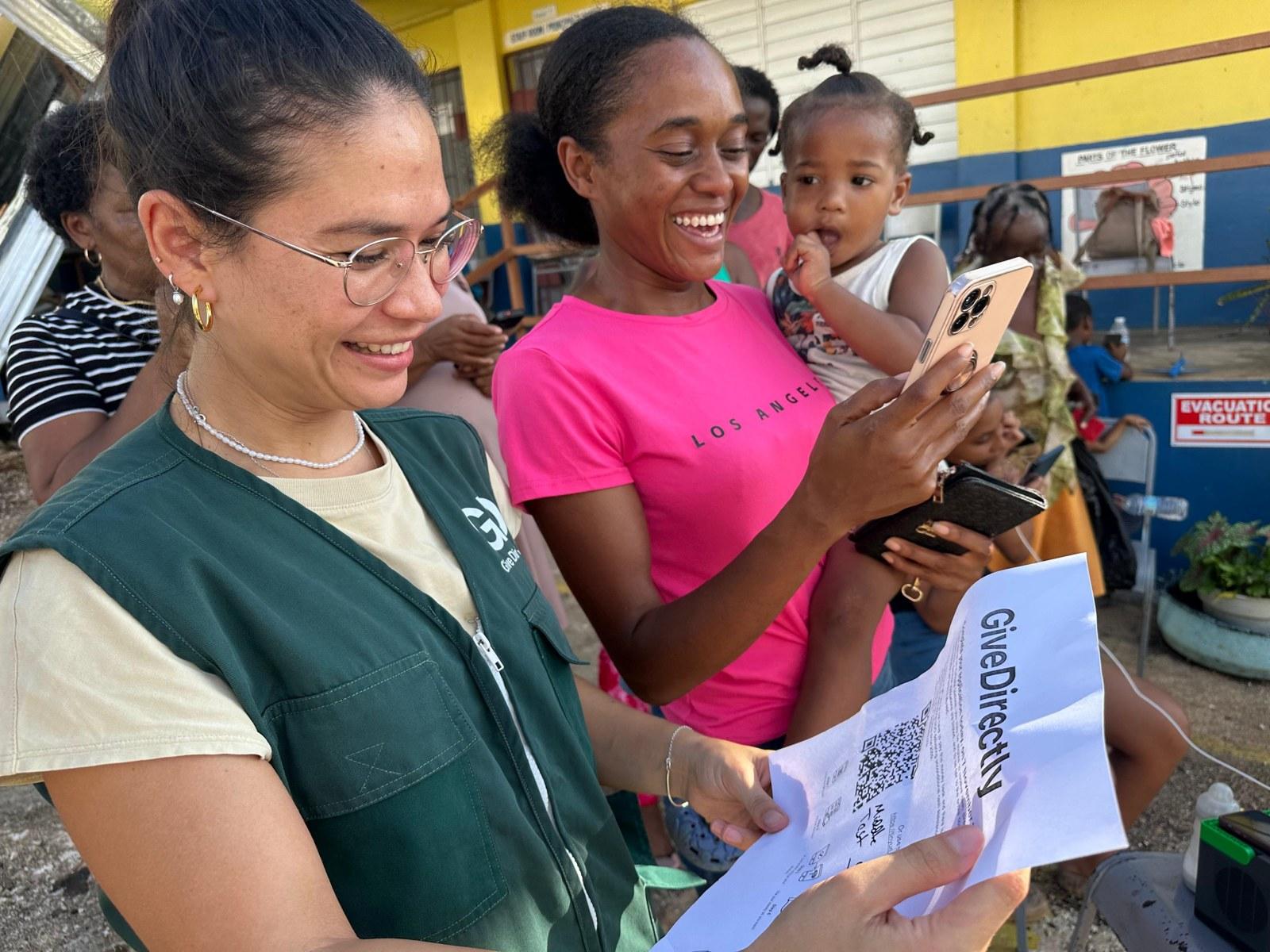
Many of GiveDirectly's programs enroll recipients by phone, with a call center agent filling in each person's details for them. That works well in many settings. But disaster responses reach a much wider range of people, and many of them already have a smartphone and an internet connection. Letting them apply on their own phones is faster and more convenient for the people applying, and it means GiveDirectly no longer has to reach every person by phone.
Yazmin recommended Zite, and it became GiveDirectly's first tool for self-serve applications. Nearly every disaster response since has run on it: earthquakes in the Philippines and Venezuela, Cyclone Fytia in Madagascar, floods in Cambodia, and the Mayon Volcano eruption in the Philippines.
In the Philippines, where GiveDirectly had no operations on the ground, families signed up on their own phones through a QR code or a link passed around local group chats. No door-to-door surveys, no in-person visits. 96% of applicants finished registering in under an hour, half of them in under 10 minutes, and 91% rated signing up as very easy. Enrollment reached 87% of the community.
“[Zite] has been great because we now have the option for recipients to submit applications themselves instead of through an enumerator. This increases our capacity to accept applications quickly. Being able to meet recipients where they’re at was also a huge benefit of adding web forms to our toolkit.”
Making sure the money reaches the right people
Moving fast only matters if the cash reaches the people it's meant for. GiveDirectly registers recipients through an application built on Zite, designed to be quick and simple to complete:
- Program information, on demand. Collapsible FAQ sections let people open the questions they care about instead of reading everything at once.
- Eligibility first. Applicants confirm they meet the program conditions up front, so no one spends time on an application they can't finish.
- Consent and a few basic questions. The team keeps questions to a minimum so the application stays fast and simple.
- Location check. GPS coordinates confirm the applicant is actually in the affected area.
- Identity verification. Applicants finish by verifying their identity with Persona, an online ID verification platform.
Location capture was a deciding factor. Zite captures GPS coordinates right in the application, and almost every response so far has used it. In the Philippines, the location check correctly identified 97% of applicants living in the affected community.
“We’ve used GPS coordinates to make sure that the people we’re targeting are actually in the place that we think that they are. Being able to provide this option allows us the flexibility to use a variety of signals, outside of just documentation or other paperwork, to assess if a person is eligible for our programs. Many people may lose these items during a disaster and this allows us to accept a wider range of recipients with confidence.”
The same application, with or without a smartphone
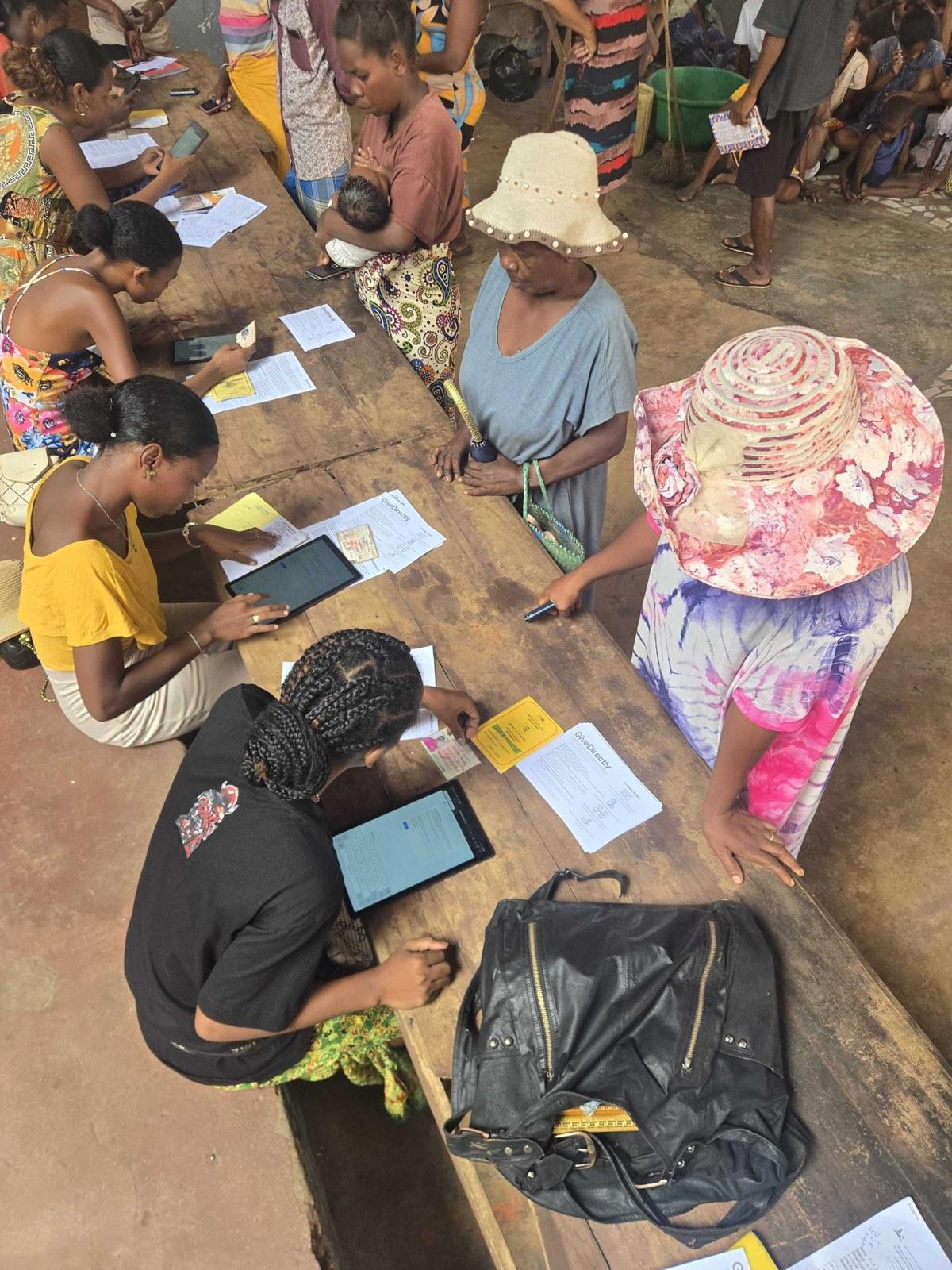
The same application works when people can't apply on their own. After Cyclone Fytia hit Madagascar, where smartphone access and literacy are low, local volunteers registered families on tablets at community sites, connected through Starlink hotspots.
With the application tied into automated ID verification, 81% of applicants passed eligibility without any extra checks, and at the busiest point volunteers handled more than 500 sign-ups in a single day. GiveDirectly also saw noticeably better data quality on the application's second outing.
Built to move as fast as a disaster does
Every response is different: a new country, a new language, new eligibility rules. GiveDirectly starts each one from a reusable template on Zite, so once the requirements are set, the only question is how quickly the application can go out.
“Building a new form maybe takes less than an hour, because we have the reusable form. Having the reusable form also streamlines survey building so we’re not starting from scratch for each project, but building on what we learned from previous programs to make better surveys each time. After each project we review the reusable library to make sure it always has our best practices embedded.”
Translations without the bottleneck
Most applications also need to be translated. Yazmin used to collect translations from her delivery counterparts in a spreadsheet and enter them herself. Now those counterparts work in the Zite editor directly, with no training and without waiting on her.
“I don’t have to train them, so they can just jump in. It’s been absolutely amazing to reduce the coordination time around translations and to no longer be a bottleneck in launching a survey.”
Paid within days, not months
For context, GiveDirectly notes that the ambitious bar for most major aid groups is about a month to get cash out, and traditional in-kind aid can take far longer. Time from enrollment to payment has dropped with each response:
- Philippines earthquake. 524 households paid entirely remotely, with a median of 7 days from enrollment to payment, roughly three times the speed of a typical humanitarian response.
- Cyclone Fytia, Madagascar. 2,108 families paid, with first payments 18 days after landfall and an average of 6 days from sign-up to payment. Traditional flood responses can take 100 to 120 days.
- Venezuela earthquakes. 3,765 people paid, with first payments 21 days after the quakes and a median of 4 days from verified enrollment to payment. Thanks to automated identity checks, just 1 in 20 applications went to a person for review, down from almost all of them in the first Philippines response.
Support in the middle of a response
When questions come up mid-response, Yazmin's team has direct lines to the Zite team: chat support for day-to-day questions and a shared Slack channel for trickier ones.
“I’m not an engineer by background, so the chat support being very responsive and thorough is a huge benefit. The support team was able to help me with an obscure problem with one of our integrations, and it was very helpful to get a resolution to the issue in a timely manner so I could continue launching a project. And it has been amazing to have [a] Slack channel to brainstorm and triage questions.”
What the money makes possible
After payments go out, GiveDirectly uses Zite to hear back from recipients: confirming the money arrived safely, flagging any incidents, and learning what it made possible. In the US, the team ran this follow-up on Zite after GiveDirectly and Propel sent $50 payments to 238,153 families whose SNAP benefits were delayed.
“Receiving the cash was a small weight lifted off my shoulders. I wish it could be more, but I'm always grateful. I bought rice, canned goods, and noodles. I really appreciate how fast I got the money. Now I have food for at least a week. My kids are eating, and that's all that matters to me.”
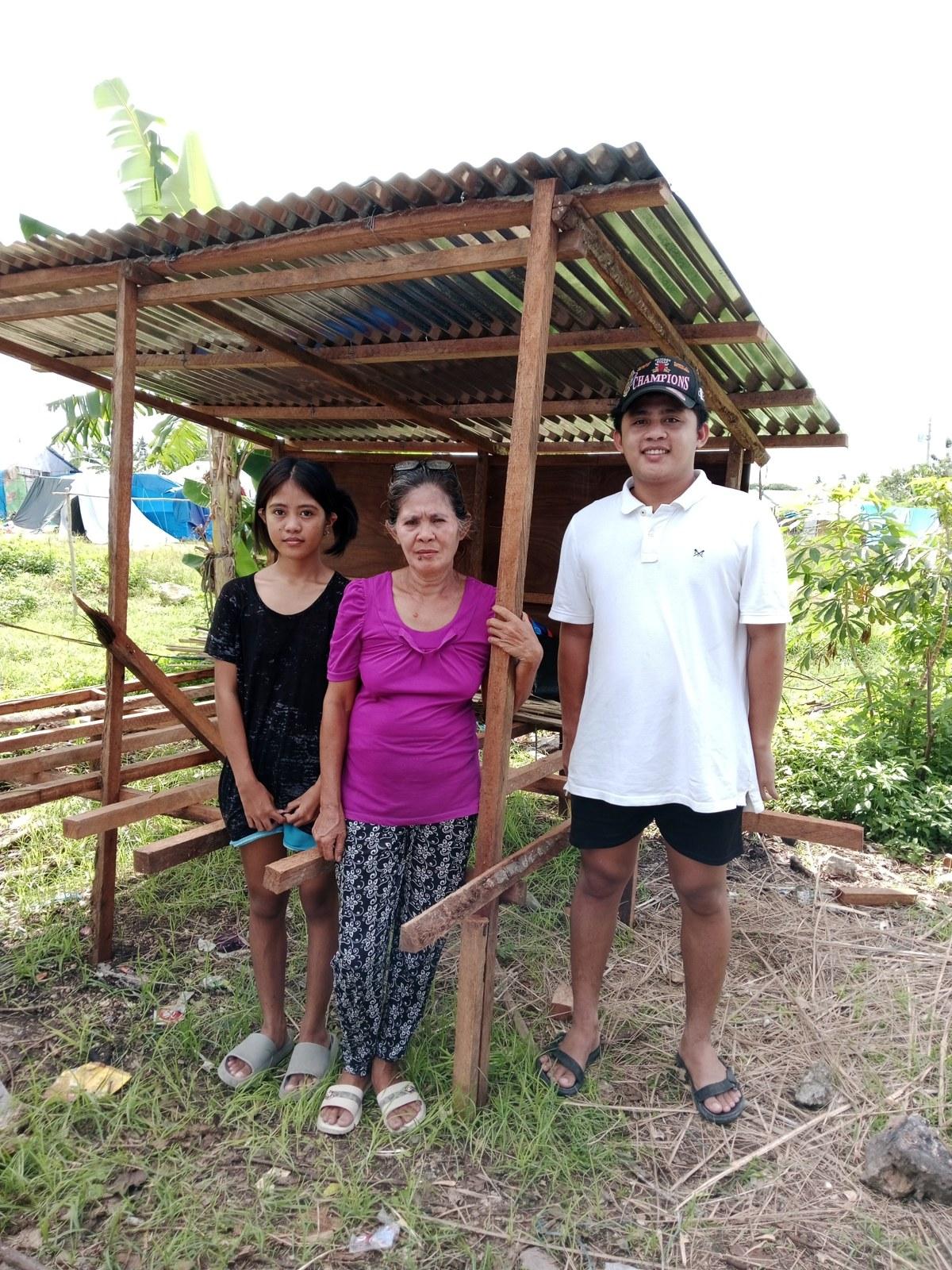
In the Philippines, follow-up showed 90% of recipients bought food, 76% put money toward shelter repairs or temporary housing, and every recipient surveyed reported feeling more financially secure.
What’s next
Every response feeds back into GiveDirectly's reusable library, so the next application starts from everything the team learned on the last one. Next, GiveDirectly is bringing more of its surveys onto Zite, so all of its data sits in one place.
Zite for nonprofits
Running programs where every day counts? See how teams build applications, eligibility checks and follow-up surveys on Zite.
Talk to our team