Bending Spoons to acquire Airtable for $1.285 billion
Bending Spoons, the Milan-based company behind Evernote, WeTransfer, komoot and Vimeo, has signed a definitive agreement to buy Airtable in an all-cash deal expected to close later this year. More than 500,000 organizations run on Airtable, and the buyer has a well-documented pattern with the companies it acquires. Here is what’s confirmed, what to watch, and what to do before your renewal date.
Who is Bending Spoons,
and how do they operate?
A Milan-based, Nasdaq-listed company that buys established software products — Evernote, WeTransfer, komoot, Vimeo, AOL — and has never sold one. In their own words:
The model
“A bit of a mix of a private equity, maybe 25%, and 75% a technology company … We’re not a fund. We buy to hold and operate forever.”
Luca FerrariCEO and co-founder, on CNBC
The playbook
“The transformation is typically deep and entails reorganizing teams, overhauling technology, redesigning user interfaces … and enhancing marketing and monetization.”
Bending Spoonsin the Airtable announcement
The team
“While we don’t enjoy making painful or unpopular decisions, we’re prepared to do so when we believe it’s the right thing to do to help the business thrive.”
Luca Ferrariconfirming plans to cut 75% of WeTransfer’s staff, to TechCrunch
“Enhancing monetization” is the official phrase. “Price hikes and layoffs” is how TechCrunch translates it.
What happened to the last companies they bought
Nothing has been announced for Airtable. This is what happened to the free plan, the price, the data terms and the team at the last four.

Evernote
Bought 2022
The free plan
100,000 notes→50 notesPaid prices roughly doubled to tripled.


WeTransfer
Bought 2024
Your data
Terms rewritten to claim broad rights over uploadsReversed after backlash. WeTransfer says no files were used to train AI.

komoot
Bought 2025
The people building it
150 staff→~80% gone in 2 weeksFounders out.
How Airtable will change
(most likely)
None of this is certain. But if the record above repeats, these are the six most likely changes, each with the precedent behind it.

The people who built Airtable won't be the ones running it
The acquired team is usually replaced by a much smaller central team, founders and long-timers included. Your data may stay. The people who understood the product probably won’t.
Precedent
Evernote went from 341 people to 60. WeTransfer cut 75%. Across AOL, Eventbrite and Vimeo, only "a few hundred" of 1,830 acquired employees are expected to remain.
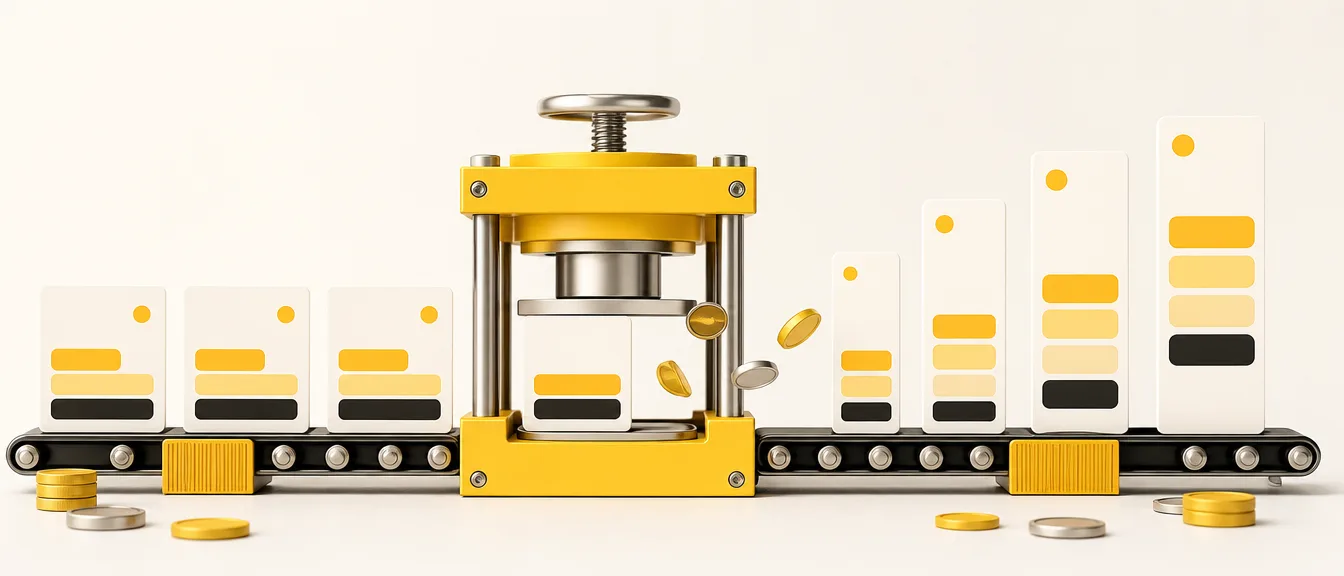
Plans and prices will be rebuilt within 6 to 18 months
Expect more than a flat price rise. The pattern is a full rebuild of plans, limits and renewals, tested until it finds what each account will pay.
The plan you're on today probably won't exist
Older plans are more often ended than simply made more expensive. Customers are moved to new plans at renewal.
Precedent
StreamYard ended six older plans at once. Loomly customers couldn’t return to earlier pricing. Issuu folded its old plans into one.

The free plan will survive in name, not in usefulness
Free tiers tend to stay, but the useful parts move behind paid plans. For Airtable, that could mean records, automations, collaborators or published apps.
The harder Airtable is to leave, the more it will cost to stay
The biggest reported increases hit customers with the highest switching costs. Years of work stored in Airtable are what make leaving expensive.
Precedent
One Harvest account was quoted $16,200 at renewal, up from $1,927. Issuu publishers reported renewals more than quadrupling. Both are customer reports.
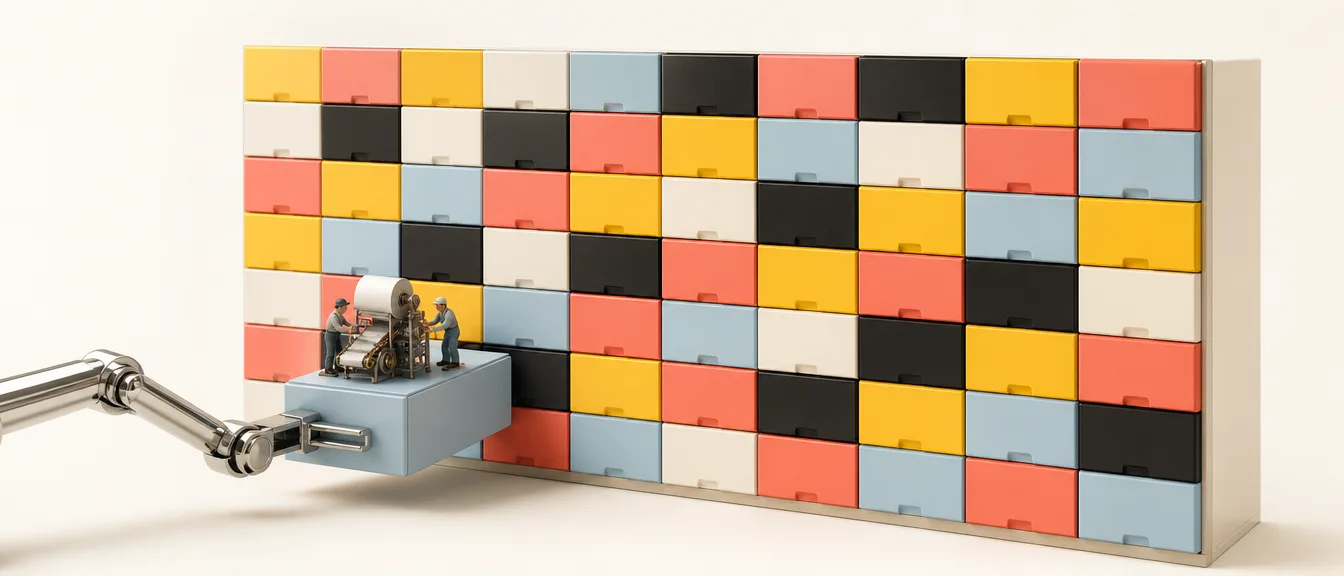
Features you rely on could disappear
Products get narrowed around their most valuable uses. A feature used by too few accounts gets cut, no matter how essential it is to the teams that built a process around it.
Precedent
Vimeo is winding down Vimeo On Demand. Loomly ended support for X. Remini removed photo colorization and scratch removal. komoot tightened device syncing, then partly reversed it.
What to do if you run on Airtable
Today
Nothing changes yet
The deal hasn’t closed. Your bases work as before. This is the window where you decide calmly.
This week
Export your data
Five minutes, costs nothing, and it’s yours whatever happens next. Save a copy of today’s terms while you’re at it.
Before renewal
Know your options
Find your renewal date, ask about locking a multi-year rate, and test an alternative with one base. Choosing beats scrambling.
Are there any better
Airtable alternatives?
The three tools Airtable users reach for first, scored on the five things an Airtable base actually does.

Notion
Docs and wikis first, databases second
Charges per person
Free plan for individuals
- ✓Database with linked records
- ✓Formulas
- ~Forms basic
- ~Automations basic, on paid plans
- ✕Interfaces pages, not apps
Great at: notes, wikis and docs with data sprinkled in. If your bases are light and your writing is heavy, it’s a real option.
Zite
Database, apps and workflows in one
Free with unlimited users
No charge per person, ever
- ✓Database with linked records
- ✓Formulas 80+ functions
- ✓Forms from the team behind Fillout
- ✓Automations visual workflows
- ✓Interfaces real apps, with login
Also: one-click Airtable import, and AI builds the first version for you.
Import from Airtable
Coda
Docs with deeper tables
Charges per Doc Maker
Viewers and editors are free
- ✓Database with linked records
- ✓Formulas very deep
- ~Forms basic
- ✓Automations plus buttons in docs
- ✕Interfaces doc sharing, not apps
Great at: living documents with real calculations inside. Gets strained once you’re managing thousands of records.
 vs.
vs.The full Zite vs Airtable comparison
The detailed feature-by-feature breakdown: every field type, plan limits, performance benchmarks and pricing side by side.
Read the full comparisonWhat is Zite?
Zite is the first AI systems builder, from the team behind Fillout. Describe what your business needs and it builds the whole thing: the apps, the forms, the logic and the database they all run on — with everyone included, no charge per person.
Build business apps, fast
Prompt to build the software you need.Describe your app and watch Zite get to work.
Understand every layer
See the workflows under your app.
Deploy to your users
Ship your app to internal or external users.No per user fees, ever.
TL;DR: The short version
Outgrowing Airtable? Zite gives you real apps, no per-seat fees, and everything in one platform. Airtable has a bigger extension marketplace.
 Airtable may be better if…
- •You rely on Airtable's third-party extension marketplace
- •You need native iOS and Android apps, not a mobile web app
- •You only need a flexible database, not apps with login or permissions
Zite is best if…
- You need a standalone app with its own login — not a layout inside a base
- Per-seat pricing is blocking your team from getting access
- You want a database, apps, forms, and workflows in one platform
- You want to build on top of your existing tools and data
Zite vs Airtable pricing
Airtable charges per user. Zite doesn't. Use the sliders to see how the costs compare as your team grows.
Users
10Database records
25kPortal guests
5What else is in your stack?
Almost nobody runs Airtable on its own. Add the tools you’d need alongside it.
About Zite
If you are moving your data somewhere, it is worth asking where it is going and the long-term implications. Zite has been cash flow positive for the last three years and works with some of the largest organizations in the world, including Wayfair, Domino’s, City of Boston and The Athletic.
We’re backed by 20+ world-class investors, including Dylan Field (Figma CEO), Nat Friedman (former GitHub CEO), Jack Altman (Lattice co-founder), Cristina Cordova (Linear COO), Elad Gil, Greg Rosen and Lachy Groom. We haven’t spent a dollar of what we raised — the company runs on revenue from paying customers, and we have purposefully avoided raising at valuations that would pressure us to sell or go public.
On security: Zite is SOC 2 Type 2 and GDPR compliant, and everything is encrypted in transit and at rest. A database can be rolled back to a specific minute, so a bad import is an undo not a support ticket. Full details are in our security overview.
- 5 years
- Serving customers
- 3+ years
- Cash flow positive
- 100,000s
- Teams building on Zite
- SOC 2
- Type II compliant
Select case studies




Common questions
Teams running operations choose Zite.
"The built-in database is incredibly powerful. We migrated from Airtable and haven't looked back."

Diana Viglundsdottir
Director of Product, Syn.is
"The granular permissions mean we can safely share and secure data, forms & apps across departments without worry."


Ravi K. Udeshi
Election Manager, Fairfax County
"Zite's database handles all our complex relational data while remaining simple to use for anyone on our teams."


Michael Villenave
Head of Internal Comms, Domino's France
Business reviews
5/5
Product Hunt
4.7/5
Ready to move to a more future-proof platform?
Start building for free — no credit card required.
Sources: Deal terms and quotes from the Bending Spoons announcement, August 2026. Luca Ferrari quotes from CNBC’s Squawk Box and TechCrunch, September 2024. Background from Evernote, TechCrunch’s Bending Spoons explainer, TechCrunch, Escape Collective, BikeRadar, WeTransfer and The Guardian. Forecast precedents are linked where they appear, including the Bending Spoons prospectus and company help pages. The forecast itself is our judgment, not announced plans.