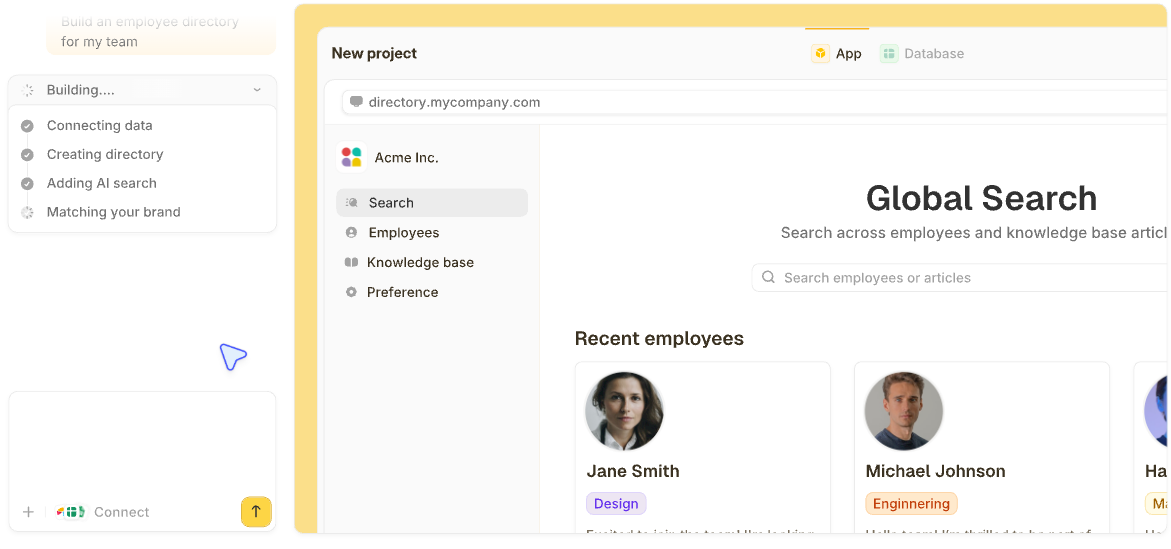

Most people searching for an app building company need a tracker, a client portal, or a dashboard their team will actually use. That's a category you can now build yourself in an afternoon, for the price of a subscription instead of a project that starts at $30,000.
Describe what you need, and Zite generates the app, its database, and the workflow logic behind it.
Start building for free. Unlimited users on every plan.
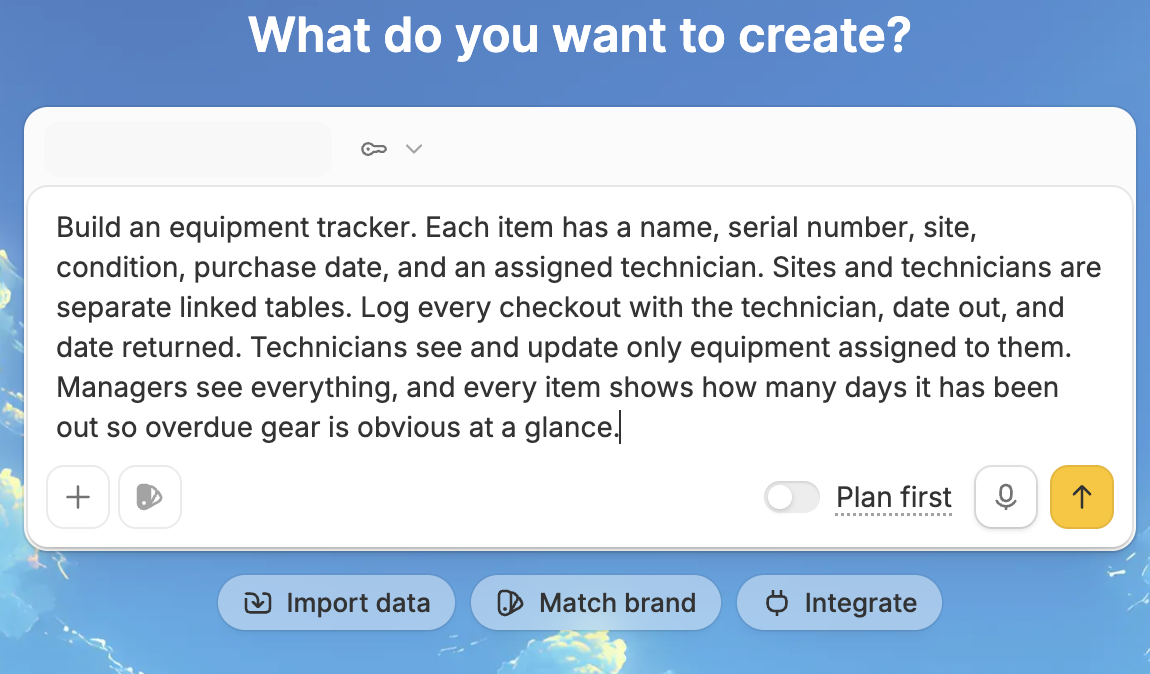
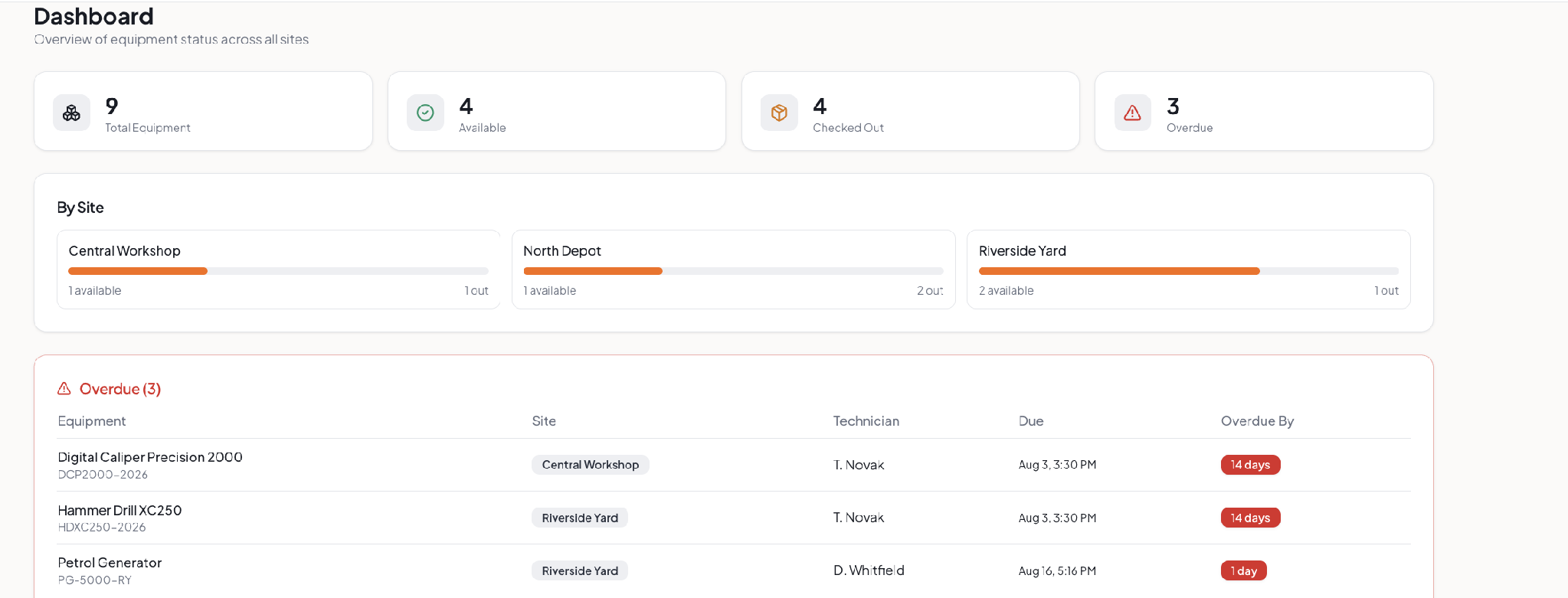
The prompt behind an app like this:
Build an equipment tracker. Each item has a name, serial number, site, condition, purchase date, and an assigned technician. Sites and technicians are separate linked tables. Log every checkout with the technician, date out, and date returned. Technicians see and update only equipment assigned to them. Managers see everything, and every item shows how many days it has been out so overdue gear is obvious at a glance.
What an app building company costs
Quotes for this kind of work vary more than most, so it's worth knowing the numbers before you take a call. Here's what each route runs:
Two costs rarely appear in the initial quote. The first is upkeep: GoodFirms' 2026 survey puts it at 10% to 20% of the build cost every year. The second is change requests, because every change after launch is a request and an invoice.
For a full breakdown, see this guide to AI app development costs.
When you should hire a company
Some builds need a development firm, and pretending otherwise wastes your time. Here's when:
- You need native mobile apps: Distribution through the App Store or Google Play, especially with offline use.
- The logic is regulated or intricate: Payroll, tax, and financial compliance calculations are where subtle errors get expensive.
- You need to connect older company systems: Legacy tools or specialized industry software.
- The app is the product: If you're building something you'll sell and extend for years, owning the code matters.
In those cases, budget for the build and the ongoing support together, and ask specifically who owns the code and what a change request costs.
If you do hire a development company, check these before you sign
Here's what separates a good app development company from a costly mistake:
- A portfolio in your category: Ask for apps that match yours in scope and industry. A team that has built inventory systems before already knows where yours is likely to break.
- Code and IP ownership in writing: Confirm you own the source code outright, not just a license to use it, before the contract is signed.
- A pricing structure with no hidden costs: Fixed price or time-and-materials both work, but the quote should say which one and what triggers extra charges.
- Named post-launch support terms: Ask what a bug fix costs after launch, what a small feature request costs, and how fast either gets handled.
- Verified reviews you can check yourself: Clutch, GoodFirms, and The Manifest all publish client reviews tied to a real company profile, not just testimonials on the agency's own site.
Compare at least two companies against this list before picking one. A single quote gives you nothing to weigh it against.
A few names to start your shortlist
These come from Clutch and GoodFirms, both cited above, and each is a verified firm ranked in those directories as of 2026. Here's where to start:
- Utility: Polished, high-budget consumer apps.
- WillowTree: Large enterprise builds with multiple teams involved.
- Fueled: Consumer-facing apps with a strong design focus.
- Designli: Startups building a first version from scratch.
- Goji Labs: General-purpose mobile and web development.
- Chop Dawg: Early-stage startups validating an idea before a full build.
- BairesDev: Large-scale staff augmentation and nearshore teams.
Run each one through the checklist above before you talk pricing. Rankings on these directories shift, so treat this as a starting shortlist, not a final answer.
Three questions the quote won't answer
A written checklist tells you what to verify. It won't tell you what the working relationship looks like once you're under contract. Ask these three questions out loud before you sign a contract:
- Who does the actual work? Some agencies build in-house, and others hand your project to subcontractors after the pitch. Ask directly, and ask to meet the people who'll be on the project day-to-day, not just the ones presenting it.
- What happens when priorities change? No project runs exactly as scoped. A team's answer here tells you more about how they'll handle month three than anything in the proposal does.
- Can I talk to a past client, not just read their review? A published review is filtered twice, by the platform and by the agency's choice of who to submit. Ask for a call with a client they didn't hand-pick.
When you don't need an app building company
Most of what businesses commission falls outside those four reasons. See six examples an app builder can get you to in an afternoon:
- Internal trackers: Inventory, equipment, assets, and job logs.
- Client portals: External logins where each client sees only their own records, from a simple booking page to a full member area.
- Request and approval systems: Intake that routes to the right approver with visible status.
- Custom CRMs: A pipeline shaped around how your team sells.
- Operations dashboards: Live views of the numbers your team checks daily.
- Onboarding systems: Per-client or per-hire checklists with document collection.
These are records, roles, and rules. They don't need a project manager or months of scoping, but you still need to write down how the process works before you describe it.
How Zite builds it
Three steps get you from a description to a live app:
1. Describe what you need: In plain language, the same way the equipment-tracker prompt above does it. Name the records, the roles, and the one rule that matters most.
2. Zite generates it: The database with proper tables and fields, the screens each role needs, and the workflow logic behind reminders, approvals, and status changes.
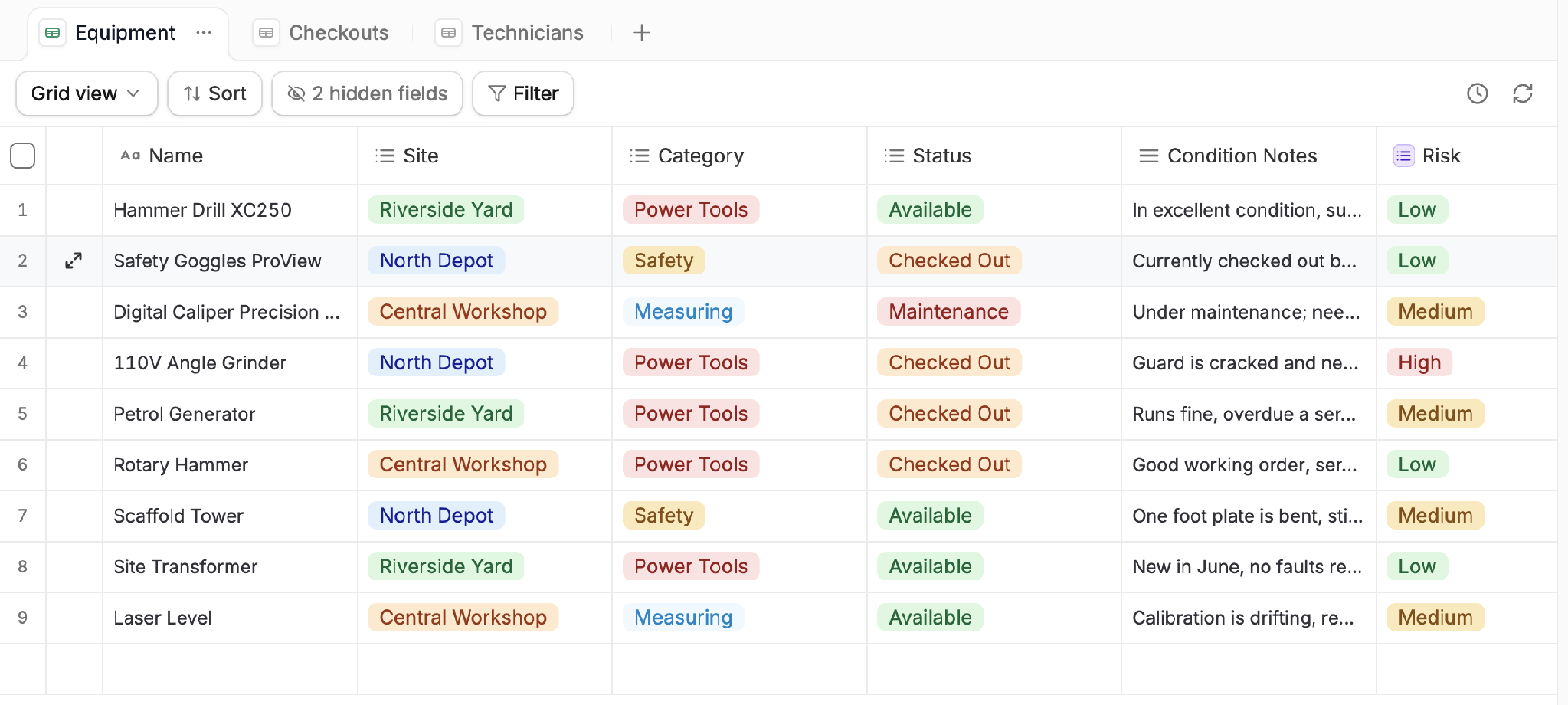
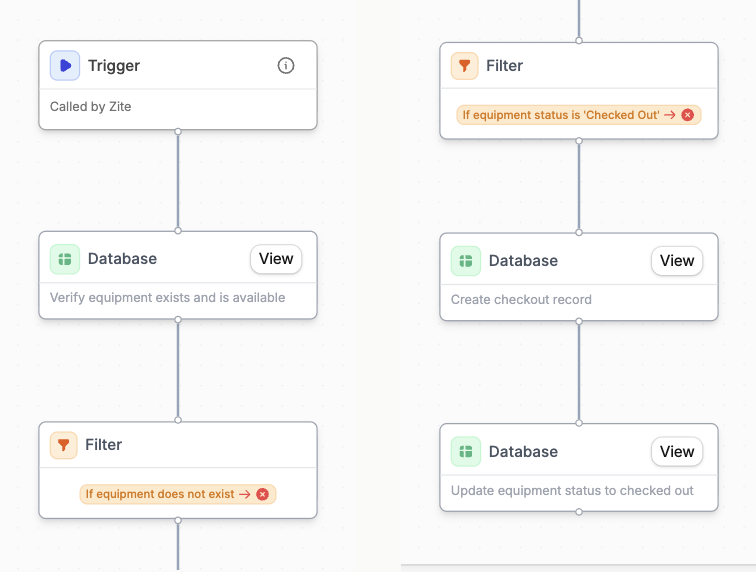
3. Check it and roll it out: Open the database to check that the tables and fields are what you expected, open the workflows to see how the app works, then invite your team. Unlimited users on every plan.
What you get without an agency
Seven things you get on day one, with no contract and no change requests:
- A real database: Linked tables and fields in a spreadsheet-style view, editable like a spreadsheet.
- Your existing data: Connect the Airtable bases and Google Sheets your team already works in, instead of starting from a blank slate.
- Visual workflows: Approvals and notifications laid out visually so you can trace what happens and re-prompt to change it.
- Role-based access: Staff, managers, and external clients each see only the records they are authorized to view.
- Unlimited users: No per-seat charges, so rolling out to your team and clients doesn't change the bill.
- Your branding: Custom domains and your own look, for internal apps and client-facing ones alike.
- Changes without a change request: The person who understands the process can describe an adjustment themselves.
Zite builds web apps, so store distribution through the App Store or Google Play isn't on the table, and it isn't designed for consumer apps like social platforms or games. A native builder or a development firm is the right call if that's what you need.
Companies like Bombas and Domino's build apps on Zite.
Zite comes from the team behind Fillout, used at scale for forms and data collection, and your apps run on secure hosting Zite manages for you.
Pricing
Billed monthly, with unlimited users and unlimited apps on every plan. The database is built in, so there's nothing separate to buy. Each tier includes:
- Free: $0/month. Unlimited users, a monthly credit allowance, 5,000 database records, and 1,000 workflow runs a month.
- Pro: $25/month. 100 AI credits a month, 100,000 database records, a custom domain, and Zite branding removed.
- Business: $89/month. 400 AI credits a month, 250,000 database records, unlimited custom domains, and advanced AI models.
Frequently asked questions
How much does it cost to pay someone to build an app?
Paying someone to build an app costs $30,000 to $100,000 for a commissioned build, according to GoodFirms' 2026 survey. Upkeep after launch adds 10% to 20% of that every year. Building it yourself on a no-code tool runs $0 to $89 a month instead.
Who can build my app for me?
The options for building your app are a freelance developer, an app development agency, an internal engineering team, or yourself using an AI app builder. For internal tools, portals, trackers, and dashboards, building it yourself is usually fastest and cheapest, since you describe the app and it gets generated.
Which company is best for app development?
Which company is best for app development depends on what you're building, not on which firm is highest-rated. Agencies suit native mobile apps, regulated calculations, and deep integrations. For business apps built on records and roles, no company is needed, because tools like Zite generate them from a description.
How do I choose an app development company?
Choosing an app development company means checking a portfolio in your category and confirming code ownership in writing. Also, get a pricing structure with no hidden costs, and read verified reviews on Clutch, GoodFirms, or The Manifest. Compare at least two before signing. One quote alone tells you nothing.
How long does it take an app building company to deliver?
An app building company takes an average of 4.5 months to deliver from kickoff to launch, according to GoodFirms' research, ranging from 1 to 9 months depending on scope. Building a single-workflow business app yourself takes an afternoon, so weigh that against the agency's three to six months before you commit to either timeline.
Try it before you brief an app building company
Describe the app you were going to pay for and see what comes back. Open the database, see how the workflows run, and change any of it yourself. Free to start, unlimited users.