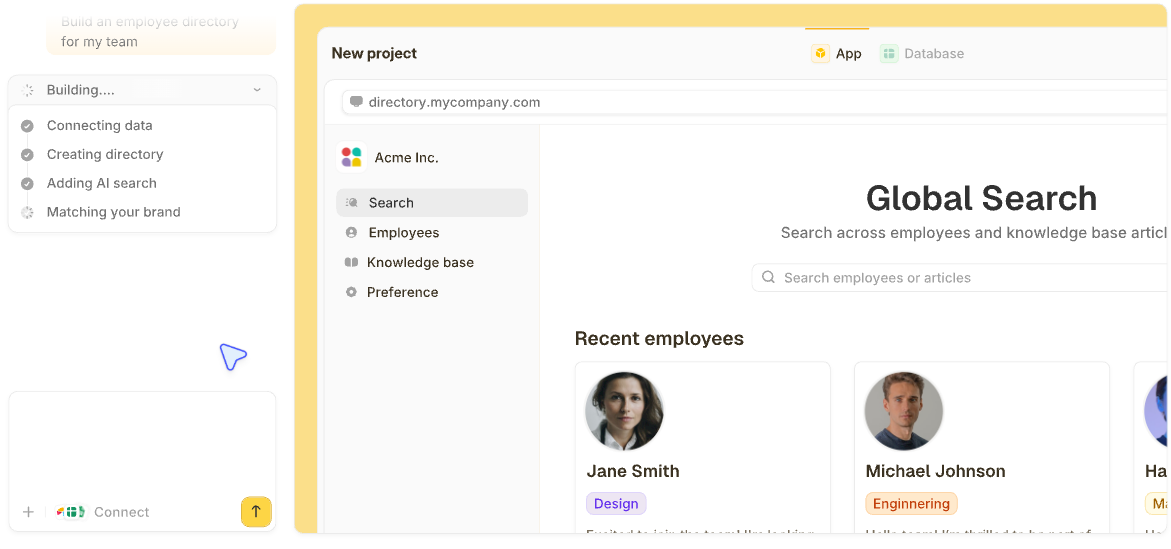

Lead scoring software ranks incoming leads by how likely they are to buy, so a demo request from this morning gets a call before an ebook download from eight months ago.
The gap between a good scoring setup and a bad one shows up fast. A good one gets your best reps talking to your best leads first. A bad one just adds a number nobody trusts to a CRM field nobody checks.
I spent about a month testing 13 lead scoring tools the way a sales or RevOps team would. I built a scoring model from website behavior and firmographic data. I tested how scores updated as a mock lead engaged over time, and checked what happened to setup complexity and cost as the model got more specific.
This guide ranks them by which kind of team each one fits, with monthly pricing and limitations.
Most tools here score leads with a model someone else designed. Zite and Gumloop are the two where you build it yourself, and Zite goes furthest by generating the whole CRM around your criteria, scoring included. That's why it scored highest on flexibility and transparency in testing.
11 best lead scoring software: TL;DR
Here are the 11 tools, ranked by the kind of team each one fits:
- 1.
 ZiteUnlimited usersBest for building custom scoring into your own CRM.
- 2.
 Best for building AI-agent-based scoring automations.
- 3.
 Best all-in-one scoring on a shared marketing and sales record.
- 4.
 Best AI-powered predictive scoring at enterprise scale.
- 5.
 Best scoring tied to marketing automation for SMBs.
- 6.
 Best value scoring rules at a lower price point.
- 7.
 Best dedicated, lightweight scoring for small sales teams.
- 8.
 Best AI scoring once you step up to its mid-tier.
- 9.
 Best for scoring anonymous website visitor intent.
- 10.
 Best sophisticated scoring for enterprise marketing automation.
- 11.
 Best for GTM teams standardizing scoring across a complex data stack.
How I researched and tested these lead scoring tools
I spent about 4 weeks building the same scoring model in each relevant tool. Points went to firmographic fit (company size, industry) and behavioral signals (pricing page visits, demo requests), with a threshold that flagged a lead as sales-ready.
I also tried two tools that didn't make the list. Pardot is now sold as Marketing Cloud Account Engagement, Salesforce's renamed B2B marketing automation product, so it isn't a separate tool to test. Clearbit, now sold by HubSpot as Breeze Intelligence, specializes in enrichment and leaves scoring to other tools.
I scored each tool on five things:
- Scoring flexibility: Whether you can weight the specific signals that matter to your business, or you're stuck with generic defaults.
- Data sources: How well it pulls behavioral and firmographic data into the score without manual entry.
- Transparency: Whether you can see why a lead got its score, or only the number itself.
- Setup complexity: How much configuration stands between signing up and a working model.
- Pricing: Whether cost scales reasonably as your contact or lead volume grows.
This testing separated tools where scoring is tunable from those where it's a checkbox that barely reflects how your business qualifies a lead.
11 best lead scoring software: quick comparison
Here's the shortlist, with what each one does best:
| Tool | Strengths | Starting price |
|---|---|---|
| Zite | Build your own scoring model | $25/month |
| Gumloop | Build your own agent | $37/month |
| HubSpot | Marketing + sales data on one record | $20/seat/month |
| Salesforce | AI predictive scoring | $25/user/month |
| ActiveCampaign | Scoring inside your email automations | $49/month + Pipelines add-on (billed annually) |
| Zoho CRM | Configurable scoring rules at a low price | $20/user/month |
| Outfunnel | Lightweight, dedicated tool | $29/month |
| Freshsales | AI scoring from Pro tier | $11/user/month |
| Warmly | Anonymous visitor scoring | $10,000/year |
| Marketo | Deep automation + scoring | Custom |
| Openprise | Standardized GTM data | $35,000/year |
Prices checked in September 2026. Warmly, Openprise, and ActiveCampaign are priced annually, and Marketo is custom-quoted. The rest are billed monthly.
1. Zite: Best for building custom scoring into your own CRM
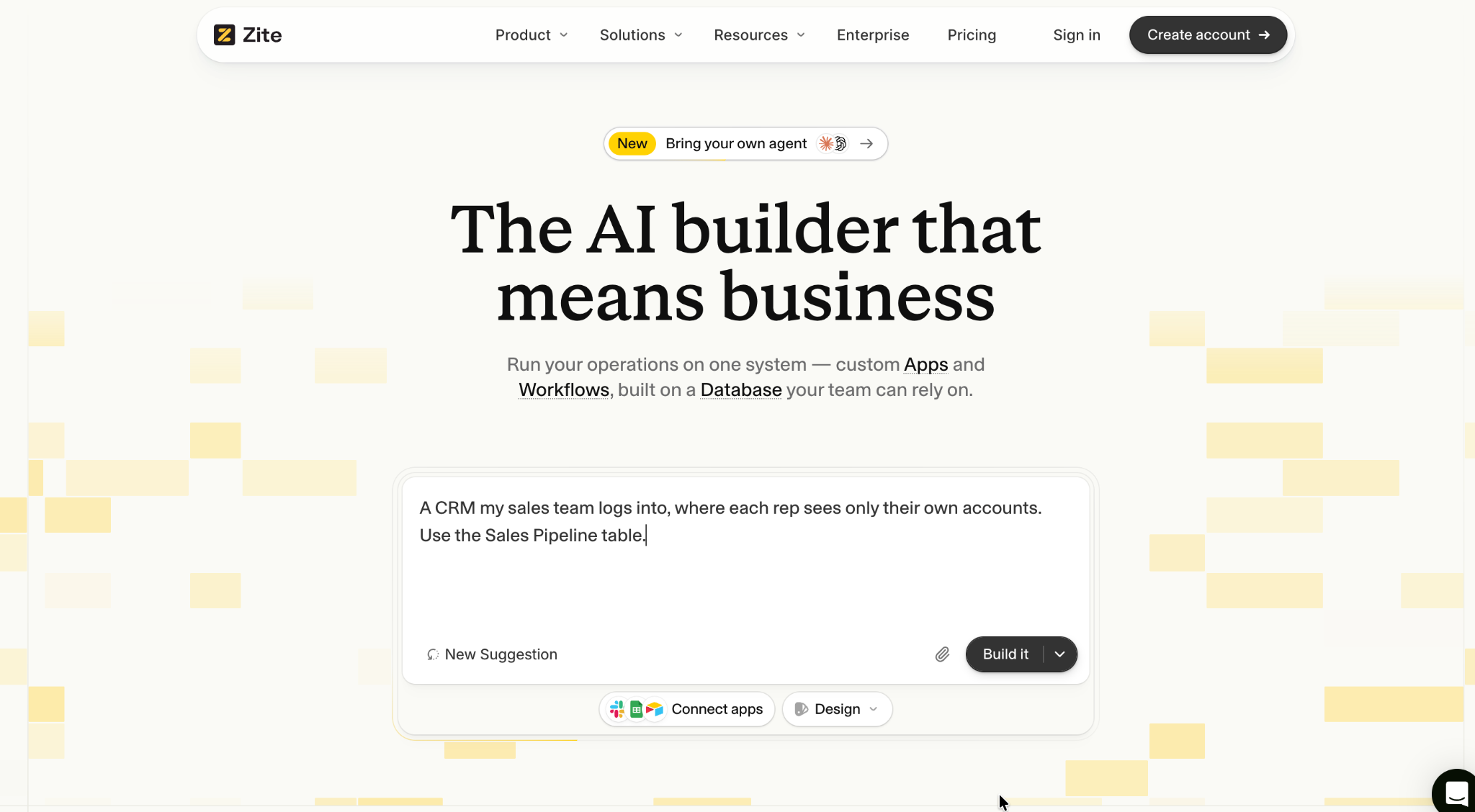
What it does: Zite is an AI-powered no-code builder that generates a custom CRM, database, and workflow logic, including scoring criteria you define, from a description.
Best for: Teams whose scoring criteria don't match a vendor's default model, who'd rather build the rules themselves.
I described a CRM with lead records and a scoring field for company size, demo requests, and pricing page visits. Zite generated the database and logic to calculate it in one pass, and it pairs well with a lead generation form feeding the CRM.
Key features
- One CRM from lead to customer: Lead capture, the pipeline, and onboarding all run on the same records, and a User field shows each rep only their own data.
- A database you can see and use: Leads sit in a spreadsheet-style view with linked company, contact, deal, and rep records. An AI field can sort each lead into hot, warm, or cold based on your instructions. Connect Airtable, Google Sheets, or Notion, or import a CSV.
- Scoring logic you can read and change: The scoring workflow is a flowchart, and describing a change updates the model. A lead that crosses your threshold alerts the rep in Slack or by email.
Pros
- Nothing to sync between a scoring tool and your CRM, since the score sits beside the pipeline.
- Traceable scores show which step added which points, so the ranking is easy to defend.
- Unlimited users on every plan, so adding a rep never adds a per-seat cost.
Cons
- No pre-built template; you design the model.
- No trained model that learns from your conversion history like Salesforce Einstein does, so scores follow your instructions.
- No visitor tracking built in, so behavioral signals come from your forms or a tool you connect.
What users say
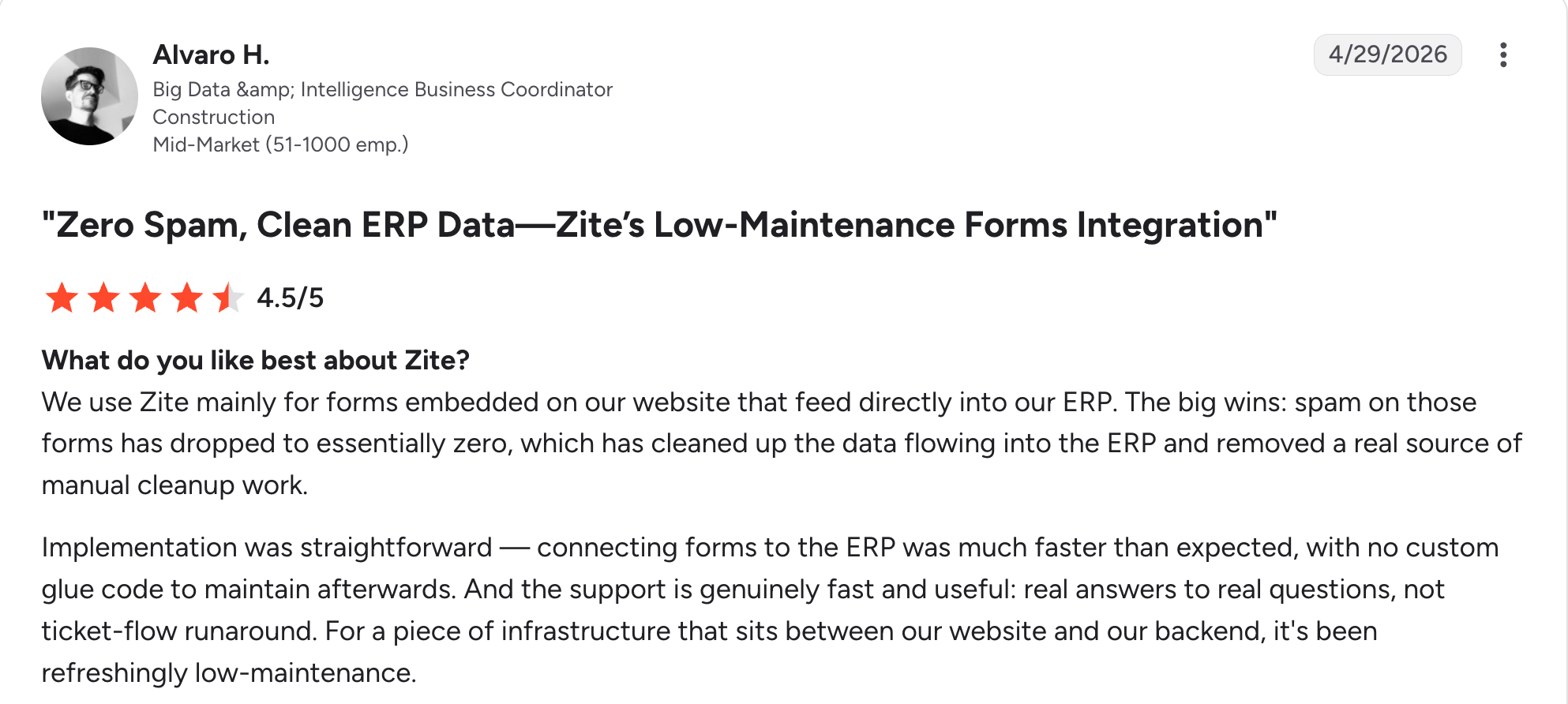
“Implementation was straightforward — connecting forms to the ERP was much faster than expected, with no custom glue code to maintain afterward.” Alvaro H, G2

“I paid for the Pro version, and all my credits got used up in a day.” Verified User, Reddit
Pricing
Zite is free with unlimited users and 50 AI credits a month, capped at ten messages a day. Paid plans start at $25/month for Pro, with 100 credits and a custom domain. Business is $89/month with 400 credits. Team is $300/month with 800 credits, and Enterprise is custom-priced. See the Zite pricing page.
Bottom line
Zite is the strongest pick for a team whose scoring criteria don't fit a vendor's template. Salesforce (Core and up) and HubSpot (Enterprise) are the better fit for a predictive model that learns from your conversion history. See building a CRM for the wider process.
2. Gumloop: Best for building AI-agent-based scoring automations
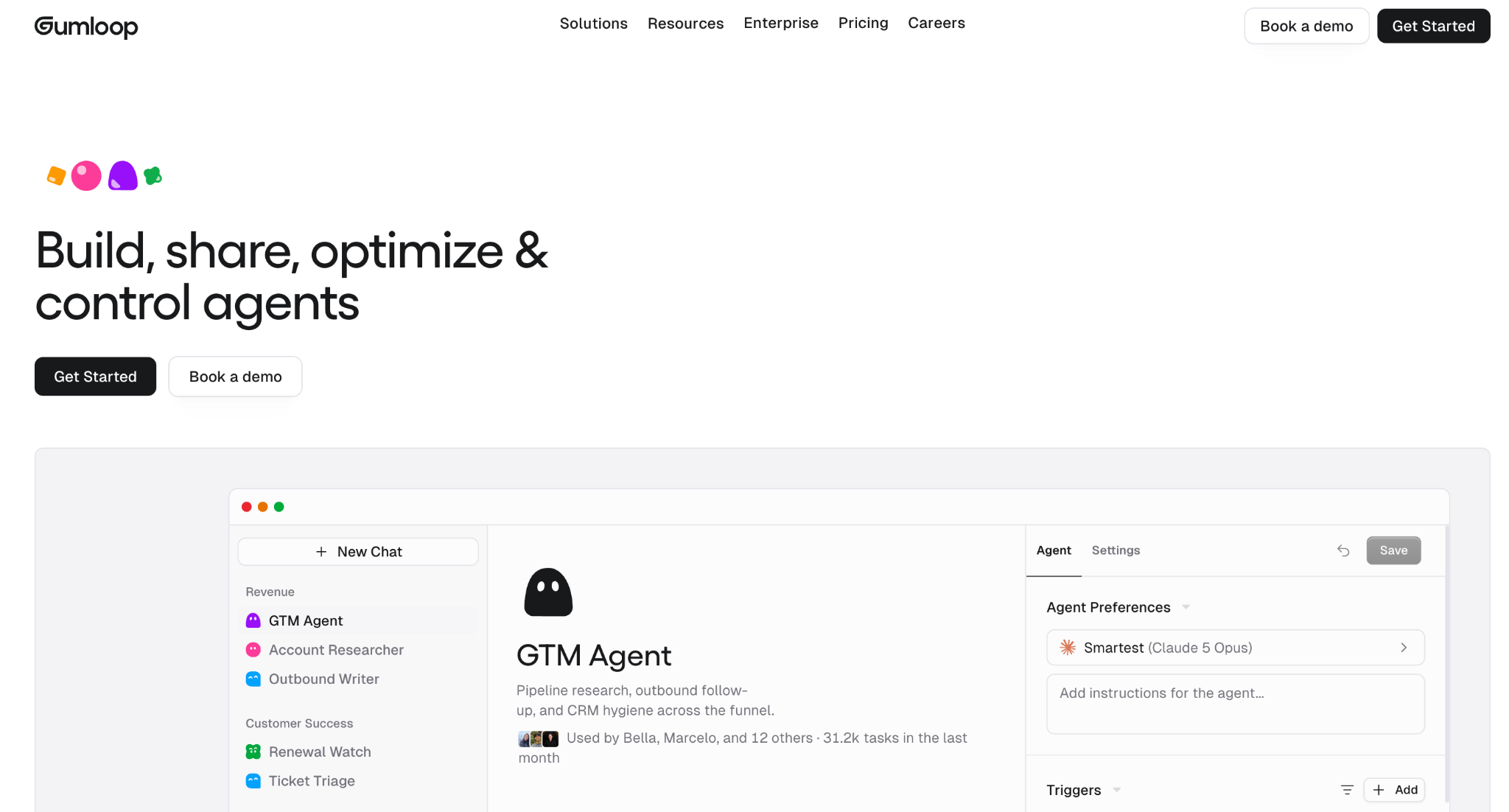
What it does: Gumloop is a visual AI agent and workflow automation builder that connects data sources and applies AI-driven logic, including custom lead-scoring rules run as an automated agent.
Best for: Technical or ops-minded teams that want scoring as one workflow among several they're already automating, not as a dedicated scoring product.
Gumloop treats scoring as one workflow among many. That changes who it suits. I built an agent that pulled a lead's firmographic data, checked recent site activity, and wrote a score back to a connected sheet. All of it triggered automatically on a new signup.
That flexibility comes with a setup cost. You're wiring a workflow, so plan an afternoon rather than a coffee break.
Key features
- Visual agent builder: Chain data pulls, conditions, and actions into one automated flow.
- Broad integrations: Connect to CRMs, spreadsheets, and marketing tools as sources or destinations.
- AI-interpreted inputs: Use a model to read unstructured text, like a form response, as part of the scoring logic.
Pros
- Scoring logic lives alongside every other automation you run.
- The 14-day Pro trial is enough to build and test a full agent before you commit.
- Handles unstructured inputs a fixed rules engine would miss.
Cons
- Building the logic step by step takes longer than configuring a scoring screen.
- No CRM of its own, so a score needs a destination to be useful.
- Best suited to teams comfortable assembling automations themselves.
What users say
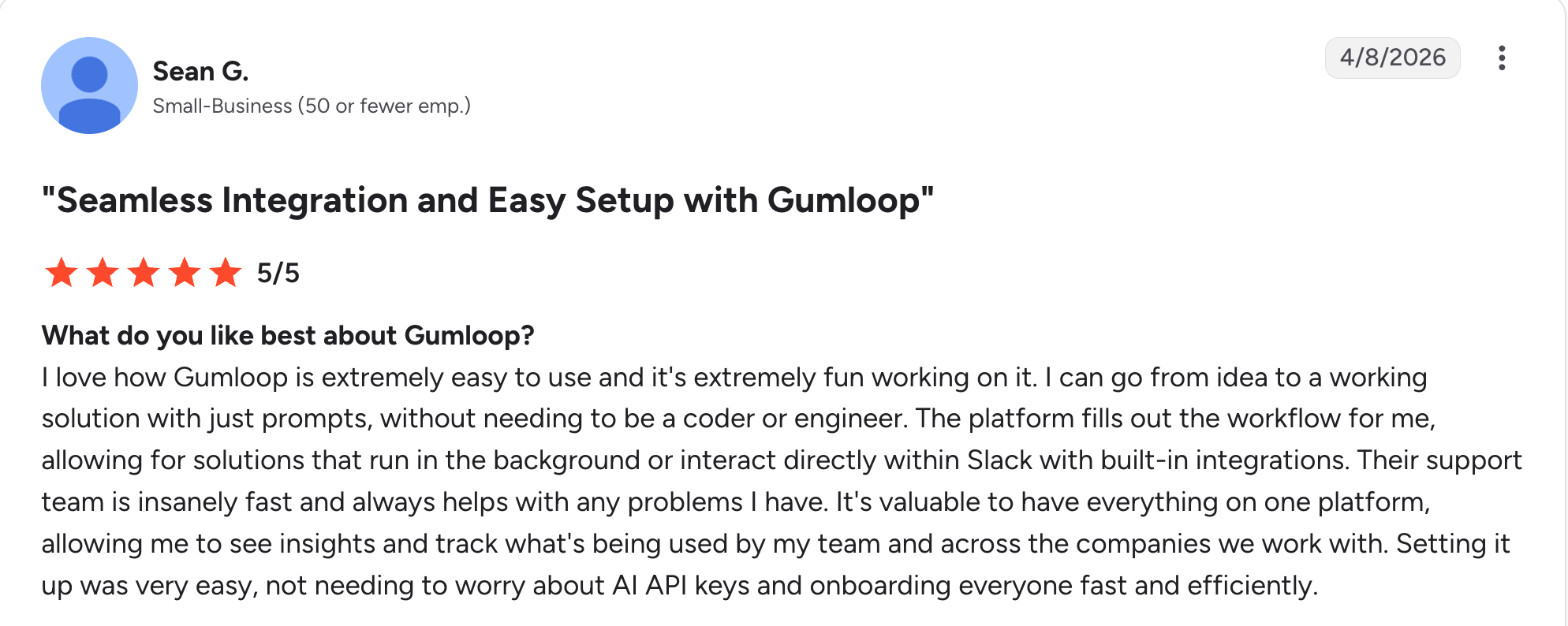
“I love how Gumloop is extremely easy to use, and it's extremely fun working on it.” Sean G, G2

“Gumloop is a newer product that is less mature, which might be an issue for enterprise customers.” Kenzan T, G2
Pricing
Gumloop has no free plan. Every new account gets a 14-day trial of Pro, and it needs a card. Pro is $37/month with 20,000 credits and unlimited agents, plus an 8% fee on top of what each agent run costs in models, compute, and tool calls. Enterprise is custom-priced. See the Gumloop pricing page.
Bottom line
Gumloop fits best when scoring is one piece of a bigger automation you're already building. If you want scoring built into a dedicated CRM instead of assembling it yourself, HubSpot or Zoho get you there faster. For the wider picture, see this roundup of workflow automation tools.
3. HubSpot: Best all-in-one scoring on a shared marketing and sales record
What it does: HubSpot combines CRM, marketing, and sales tools on a shared contact database, with scoring that weighs both behavioral and firmographic signals.
Best for: Teams that want scoring built on the same contact record as marketing and sales activity, without a separate tool to sync.
HubSpot's scoring benefits from sitting on top of its shared data. Page visits, email opens, and form fills all feed the score without a separate integration.
Lead scoring is a Marketing Hub Professional feature. The free CRM holds the contact data, but building a score at all means Professional at $890 a month. That jump is the thing to model before you commit.
Key features
- Custom scoring properties: Weight the specific signals that match your own sales process.
- Positive and negative signals: Scores drop for disengagement, like an unsubscribe or bounce, and rise for activity.
- Lifecycle stage automation: Crossing a score threshold can automatically move a contact to a new lifecycle stage.
Pros
- Shared data means page visits, email opens, and form fills all feed the score with no extra integration.
- Setup took under 30 minutes since the properties already existed as fields.
- Wide range of integrations if you're already using HubSpot for marketing.
Cons
- Professional pricing jumps sharply once you need advanced criteria.
- Less transparent about how the AI-assisted scoring weighs signals internally.
- Scoring is locked behind Professional, so there's no way to trial it on a cheaper plan first.
What users say
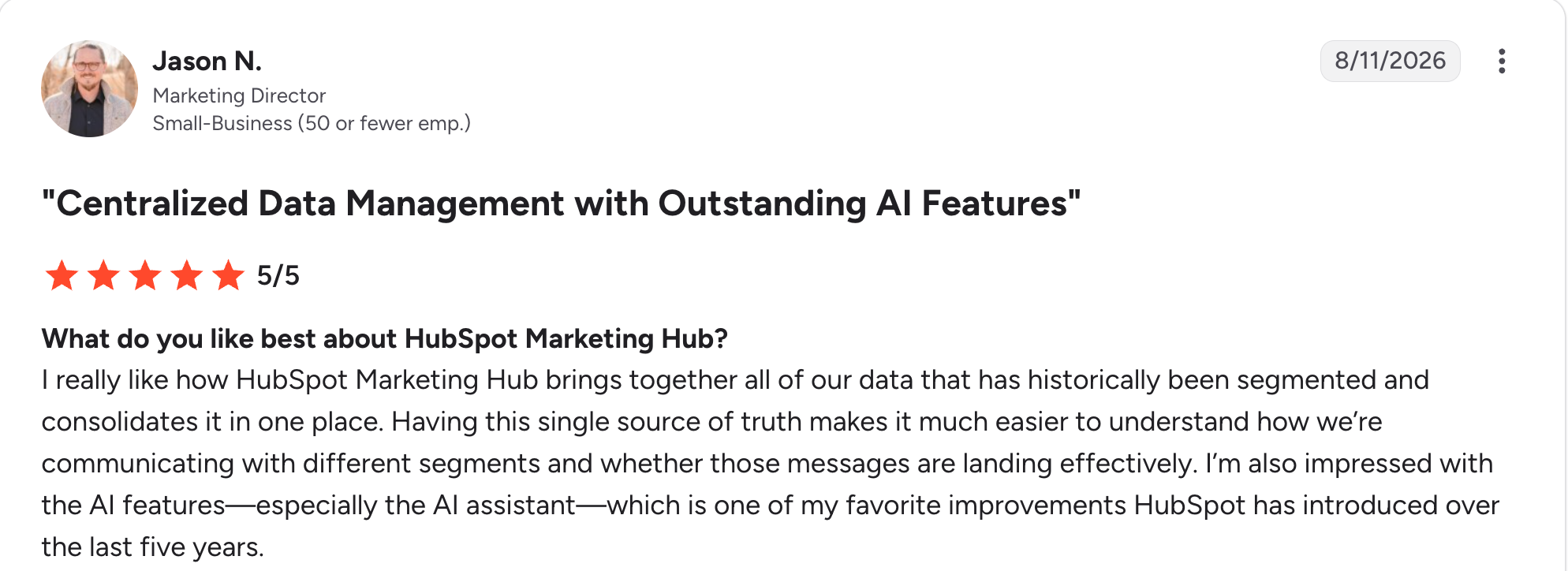
“I really like how HubSpot Marketing Hub brings together all of our data that has historically been segmented and consolidates it in one place.” Jason N, G2

“The documentation feels somewhat outdated, and it seems like a few pieces are missing.” Alex F, G2
Pricing
HubSpot's CRM is free for up to 2 users. Starter is around $20/seat/month, and Marketing Hub Professional starts near $890/month with 3 seats plus a one-time onboarding fee. Enterprise runs $3,600/month. See the HubSpot pricing page.
Bottom line
HubSpot is the safe pick for a team that wants scoring built into a shared marketing and sales database. Model the Professional jump before committing if your scoring needs get complex. If that jump is the problem, Zoho CRM covers similar ground for less.
4. Salesforce: Best AI-powered predictive scoring at enterprise scale
What it does: Salesforce offers AI-powered predictive lead scoring through Einstein, analyzing historical conversion data to automatically score new leads.
Best for: Large sales organizations with enough historical data for predictive scoring to clearly outperform manual rules.
Salesforce's predictive scoring is the most sophisticated on this list when the data volume supports it. The model learns from your conversion history instead of a fixed rule set you write by hand. That sophistication needs scale to pay off, and the cost reflects Salesforce's broader enterprise positioning, not the scoring feature alone.
Key features
- You choose the inputs: Admins can tell Einstein to ignore a field that doesn't affect lead quality.
- Score field on leads: Einstein Lead Scoring writes a score to lead records. Opportunities need Einstein Opportunity Scoring, a separate feature.
- Explainability panel: A breakdown of which signals pushed a specific score up or down.
Pros
- Combines AI scoring with rules you can still hand-tune.
- The most sophisticated predictive scoring here once your data volume supports it.
- Deepest customization ceiling on this list.
Cons
- Predictive AI scoring needs Core or above and costs extra. The entry suites don't include it.
- Predictive scoring underperforms simple rules until you have real conversion volume.
- Admin support is needed to set it up, and later changes to the model, like which lead segments it scores or which fields it ignores, also go through an admin.
What users say

“The platform is intuitive and easy to navigate, making it approachable even for first-time CRM users.” Verified User, Gartner

“The learning curve has been strong, especially since we migrated from an older "CRM" tool.” Verified User, Gartner
Pricing
Salesforce Sales Cloud starts at $25/user/month for Starter Suite, billed monthly or annually, with no user cap. Pro Suite is $100/user/month, Core is $195/user/month, Advanced is $395/user/month, and Max is $550/user/month, all billed annually. AI can be added from Core up. See the Salesforce pricing page.
Bottom line
Salesforce is the pick for a large sales org with the data and budget to make predictive scoring worth it. Smaller teams will get similar practical value from a simpler rule-based tool like Zoho CRM, for less.
5. ActiveCampaign: Best scoring tied to marketing automation for SMBs
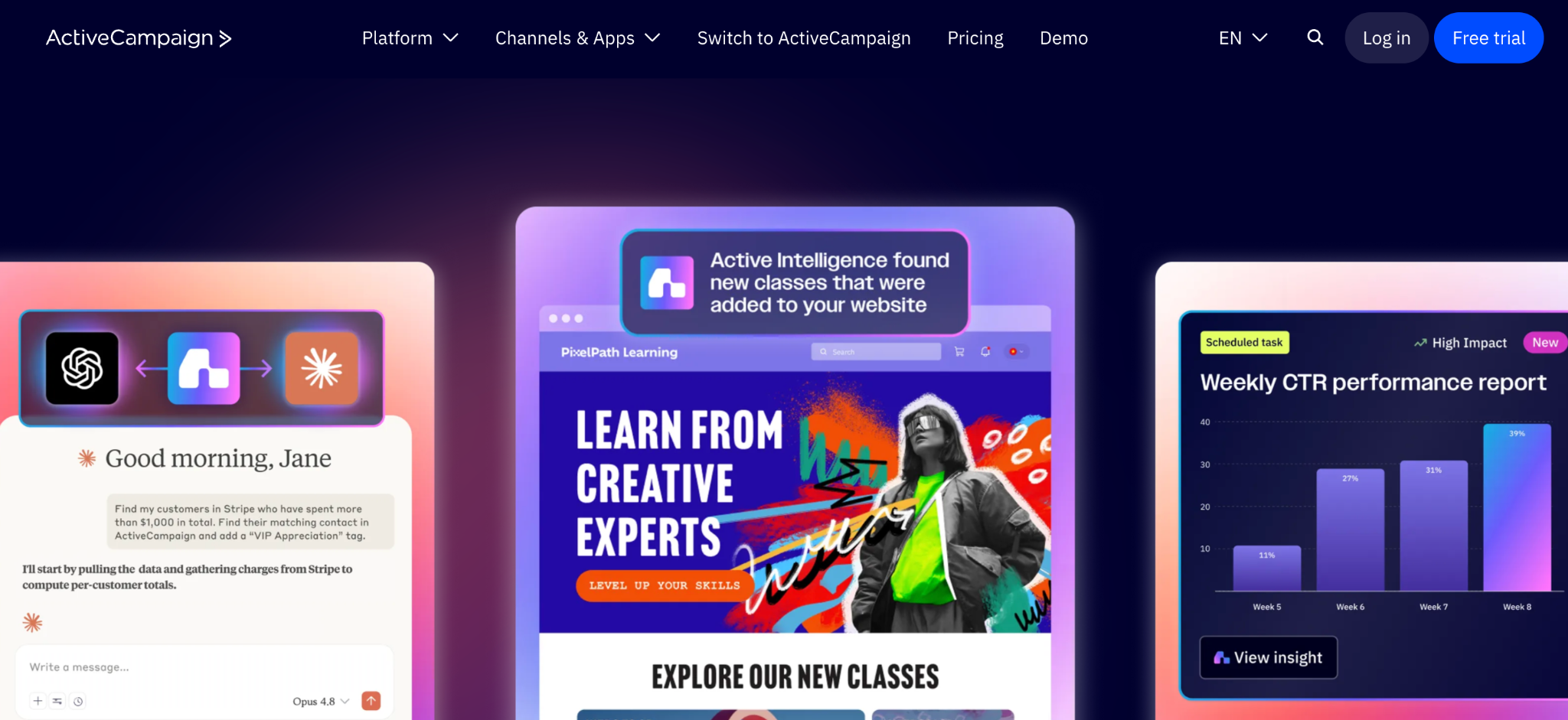
What it does: ActiveCampaign combines email marketing, automation, and CRM with contact and deal scoring tied directly into its automation workflows.
Best for: SMBs whose lead qualification depends heavily on email engagement and marketing automation triggers.
ActiveCampaign's scoring lives inside its automation builder. A lead's score updates as they move through an email sequence or trigger a behavior, without a separate scoring configuration screen. That tight coupling is the appeal for marketing-led SMBs.
Pricing scales with your contact count, so what you pay depends on your list size as much as the plan you pick.
Key features
- Deal and contact scoring: Score both the person and the associated deal separately. Scoring sits in the Pipelines add-on, so it costs extra, and Starter can't add it.
- Score-based automation branching: A workflow can route a contact differently once their score crosses a threshold.
- Site and event tracking built in: Add ActiveCampaign's tracking snippet once and behavioral points feed the score from then on.
Pros
- Setting up a score change felt like editing an automation step directly.
- Good fit for marketing-led SMB sales processes.
- Affordable entry point relative to enterprise tools.
Cons
- Reporting on scoring trends over time is thinner than dedicated analytics tools.
- Less sophisticated than AI-based predictive scoring.
- Scoring value is thin if you're not also using its automation features.
What users say
“ActiveCampaign is easy to use. The email builder, and especially the automation builder, are SUPER intuitive.” Irit L, G2

“The learning curve was steeper than I expected, especially early on when I was trying to figure out how automations, tags, and lists all talk to each other.” Micah J, G2
Pricing
ActiveCampaign's Starter plan is $15/month for 1,000 contacts, billed annually. Starter can't add lead scoring. Scoring comes with the Pipelines add-on, priced separately, which you can add to Plus at $49/month, Pro at $79/month, or Enterprise at $145/month, all billed annually at that same 1,000-contact base. Cost climbs with your contact count from there. See the ActiveCampaign pricing page.
Bottom line
ActiveCampaign makes sense when your qualification process runs through email and marketing automation. If you want scoring without a marketing automation commitment, a dedicated tool like Outfunnel is lighter.
6. Zoho CRM: Best value scoring rules at a lower price point
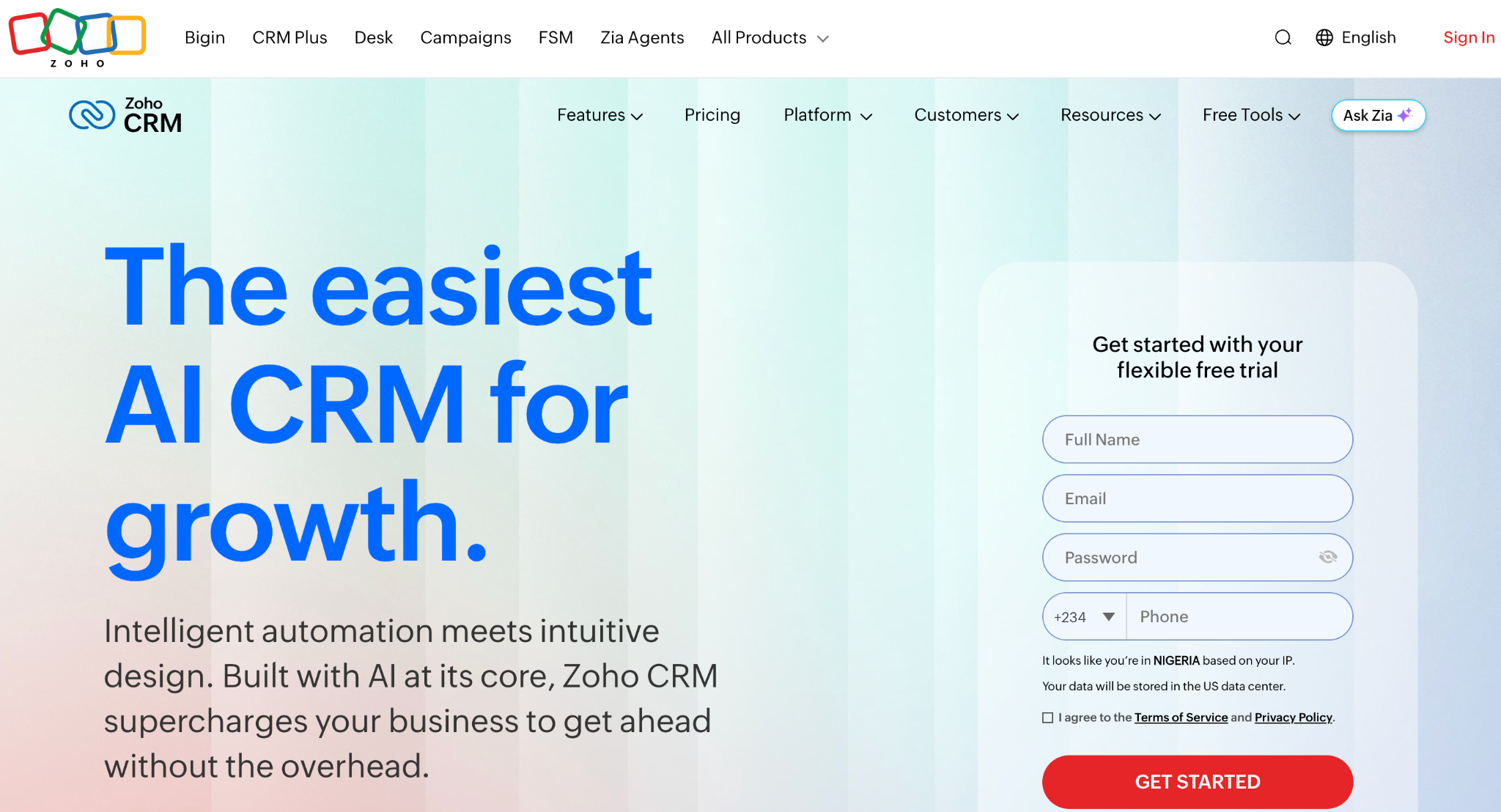
What it does: Zoho CRM includes rule-based lead scoring, letting you weight fields and activities to rank incoming leads. Scoring rules start on the paid Standard plan, not the free one. Zia's AI scoring is a separate feature that starts on Professional.
Best for: Cost-conscious teams that want configurable scoring without enterprise pricing.
Zoho CRM delivers real scoring configurability at a fraction of what Salesforce or HubSpot Professional costs, consistent with Zoho's positioning across every category it competes in. Zia AI adds some predictive elements on higher tiers. The tradeoff is interface polish, which trails the newer, more design-forward tools on this list.
Key features
- Rule-based scoring: Weight fields, activities, and engagement to rank leads.
- Zia AI scoring insights: AI-assisted scoring starts on Professional, capped at 5 Zia Scores per account.
- Score-based list segmentation: Filter and segment leads by score range directly in views.
Pros
- Setup was fast since scoring rules reused fields already in the CRM.
- Scales from a few users to a large team without switching tools.
- Zia's suggestions caught a scoring gap I'd missed in my own rule set.
Cons
- Interface feels less polished than HubSpot or ActiveCampaign.
- Best scoring features need mid-to-upper tiers.
- Monthly billing costs more than committing annually.
What users say
“The best thing I like about Zoho CRM is the lead management in the software.” Tushar B, G2

“Setting up a custom multi-account workflow and developer API configurations takes a lot of time and technical trial and error to get dialed in.” Tyler Q, G2
Pricing
Zoho CRM is free for up to 3 users. Standard is $20/user/month, Professional is $35/user/month, and Enterprise is $50/user/month, all billed monthly. Zoho also offers an Ultimate edition for large deployments. Zoho doesn't list its price on the pricing page. See the Zoho pricing page.
Bottom line
Zoho CRM is the value pick when the scoring rules matter more than the interface. Agencies wanting more design polish should compare HubSpot first.
7. Outfunnel: Best dedicated, lightweight scoring for small sales teams
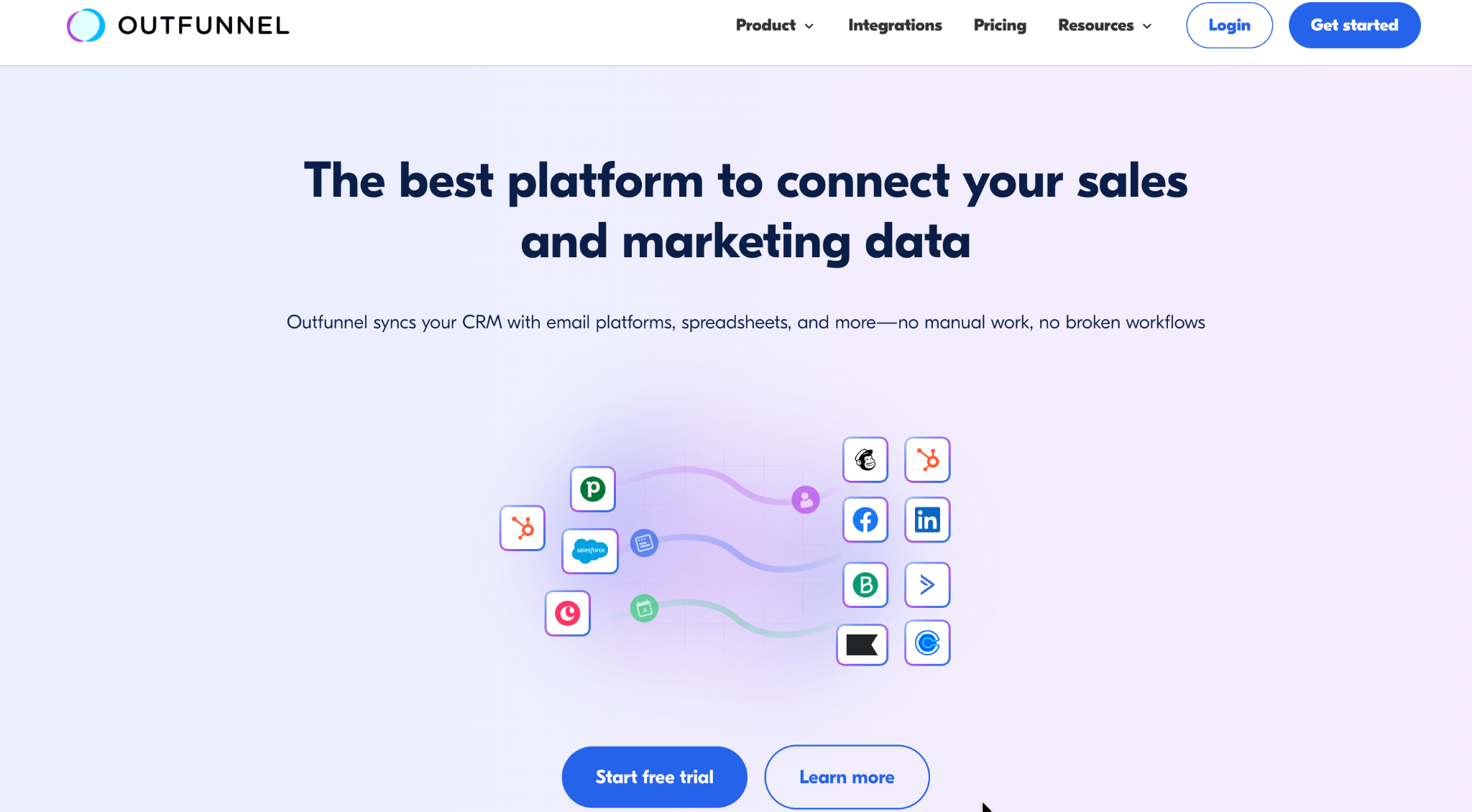
What it does: Outfunnel is a dedicated lead scoring tool that syncs website and email engagement data into your existing CRM, calculating a score without replacing it.
Best for: Small sales teams that already have a CRM and just need scoring layered on top.
Outfunnel's focus is narrow, and it shows. It does one job, scoring based on engagement, and connects to a CRM you already use. That's the right shape for a small team that likes its CRM but wants better prioritization.
Key features
- Engagement-based scoring: Website visits and email activity automatically feed the score.
- Real-time score sync: Score changes push to the CRM as they happen.
- Active-contact pricing tiers: Cost scales with the number of contacts you have.
Pros
- Setup took under an hour since it only had one job to configure.
- Layers onto the CRM you already use instead of asking you to switch.
- Free trial to test before committing.
Cons
- Built to sit on top of a CRM, so it's a poor fit if you don't run one.
- Narrower feature set than an all-in-one tool.
- Scoring stops at engagement, so firmographic fit has to come from your CRM.
What users say
“Outfunnel has been a fantastic addition to our system, streamlining both administration and lead automation.” Lex W, Capterra

“There were several data discrepancies between Outfunnel and our CRM that caused a lot of extra time and work to maintain our data integrity.” Laura L, Capterra
Pricing
Outfunnel's Basic plan starts at $29/month for 100 active contacts. Professional starts at $99/month for 1,000 contacts, adding ecommerce events and deal fields. Scale starts at $299/month (billed annually) for 15,000 or more contacts. Every plan includes a 14-day free trial. See the Outfunnel pricing page.
Bottom line
Outfunnel is the right call when you like your CRM and just want better lead prioritization on top of it. For scoring built into a brand-new CRM, HubSpot or Zoho cover both in one tool.
8. Freshsales: Best AI scoring once you step up to its mid-tier
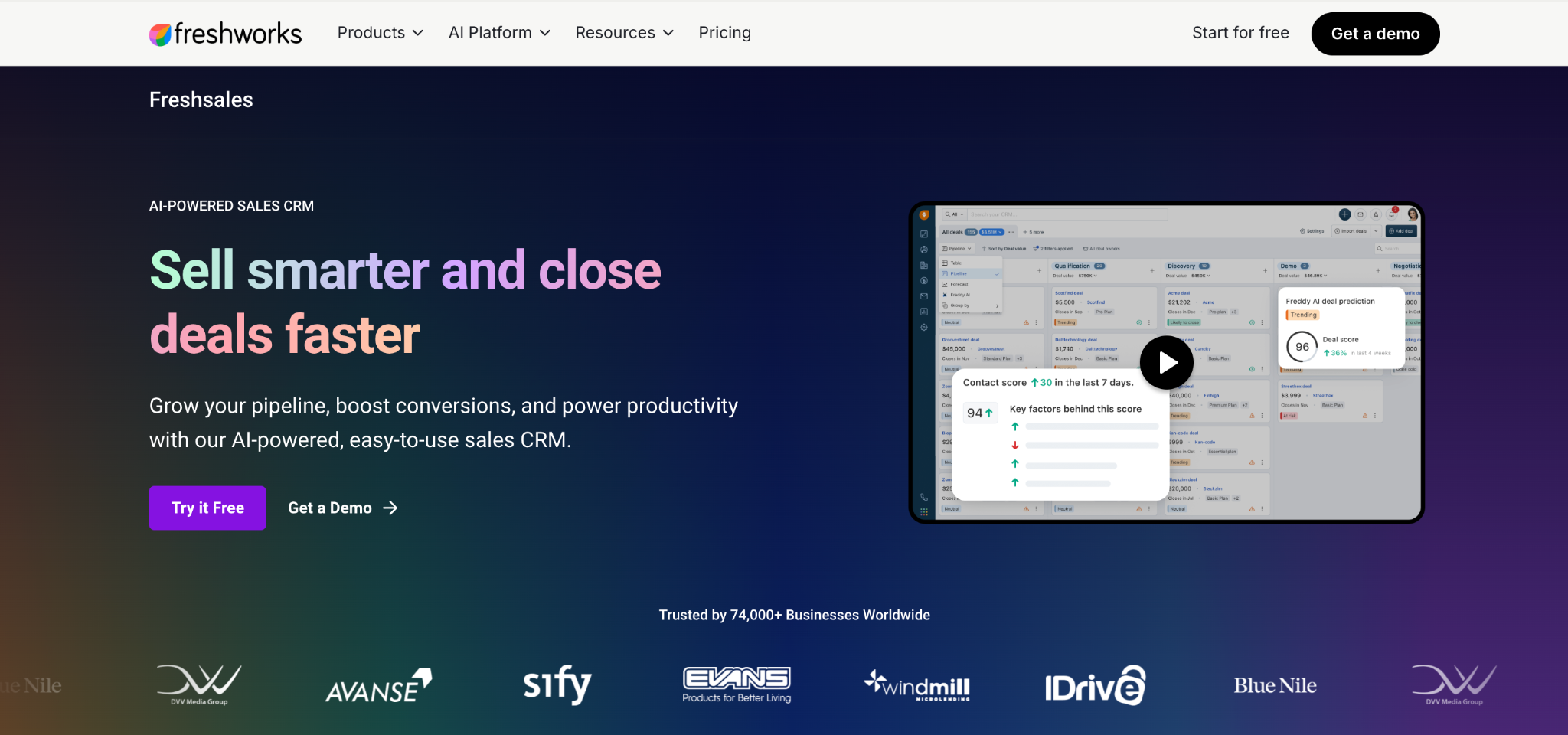
What it does: Freshsales is Freshworks' sales CRM with Freddy AI providing automated lead scoring based on engagement and profile data.
Best for: Budget-conscious teams that still want AI-assisted scoring.
Freshsales undercuts most of this list on price. AI-based scoring through Freddy starts on the Pro tier at $47 per user, still cheaper than most AI scoring here. A 21-day trial covers the whole product, a reasonable place to test scoring before committing to a paid plan. It's less customizable than Salesforce's Einstein scoring, the expected tradeoff here.
Key features
- Freddy AI scoring: Automated lead prioritization based on engagement and profile fit. Pro tier ($47/user/month) and above.
- Built-in phone and email: Scoring alongside outreach tools in one interface.
- Deal-level scoring: Freddy Deal Insights scores deal likelihood to close, alongside the contact score. Pro and above.
Pros
- Cheap entry at $11 per user if you want the CRM first and the AI scoring later.
- Straightforward setup relative to enterprise tools.
- Deal scoring surfaced a stalled opportunity I'd have otherwise missed.
Cons
- Less customizable scoring model than Salesforce or Zite.
- Reporting depth trails mid-market and enterprise tools.
- AI scoring works best with sufficient engagement data volume.
What users say
“I like the lead tracking and email follow-ups; it saves time and keeps things organized.” Himanshu L, G2

“Bulk-data imports give vague error notifications that slow cleanup for our IT reseller prospect datasets.” Ryan S, G2
Pricing
Freshsales offers a 21-day free trial. Growth is $11/user/month, Pro is $47/user/month, and Enterprise is $71/user/month, all billed monthly. Annual billing lowers each tier. See the Freshsales pricing page.
Bottom line
Freshsales is the budget pick that doesn't feel like one, thanks to Freddy AI. Teams needing highly customized scoring criteria should compare Zoho or Zite instead.
9. Warmly: Best for scoring anonymous website visitor intent
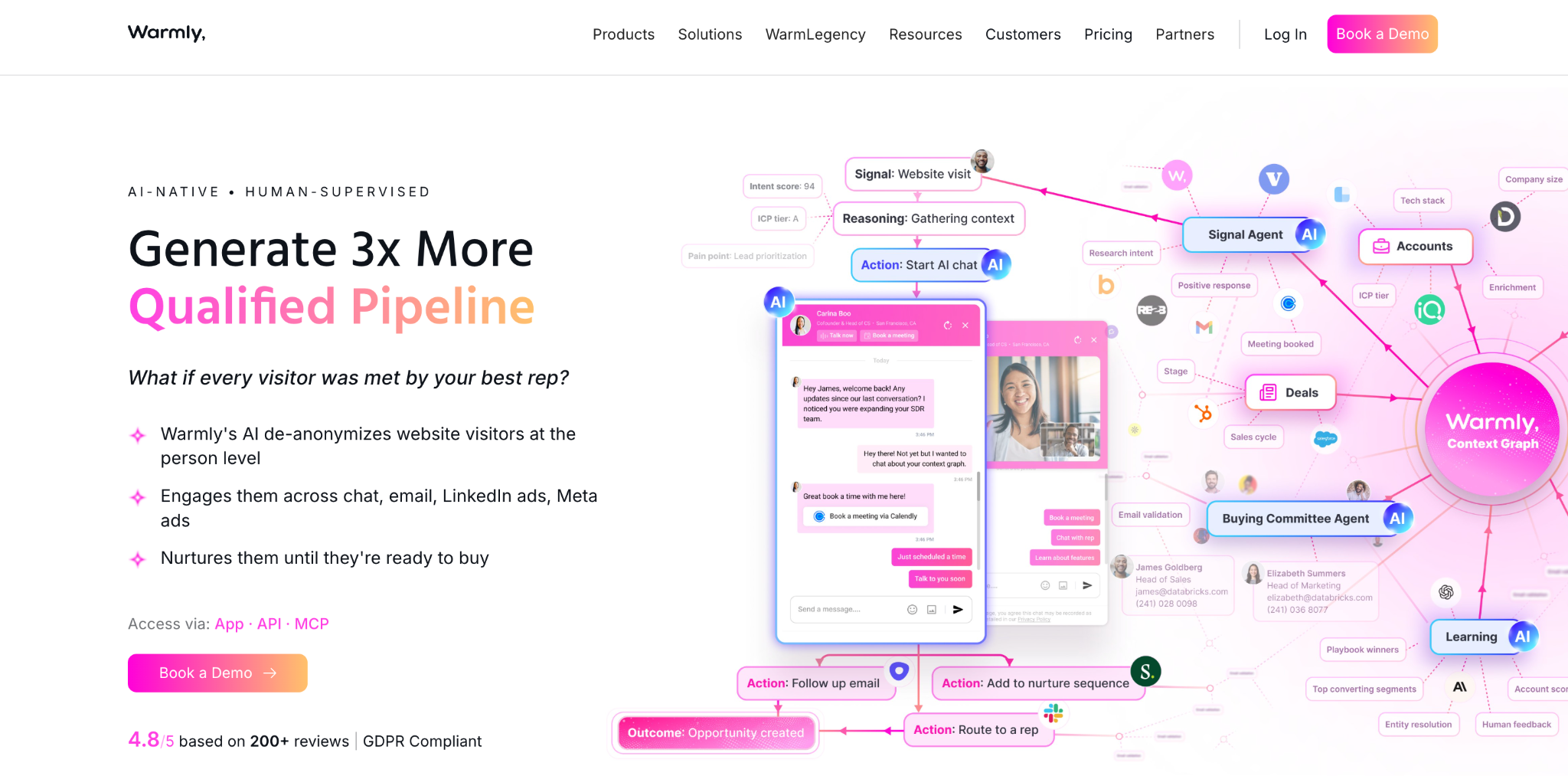
What it does: Warmly identifies anonymous website visitors and scores them by real-time buying intent, alerting sales when a high-intent account is active on the site.
Best for: B2B sales teams whose biggest blind spot is visitors who never fill out a form, and who want intent scored before a lead identifies themselves.
Warmly's job starts before a lead exists in any CRM. It deanonymizes site traffic and scores the visit itself, based on pages viewed, time on site, and whether the visitor matches a target account profile.
Testing this meant watching a mock visit from a target-account IP get flagged and scored within about a minute, before anyone filled out a form. That speed is the whole pitch, at a price point built for teams already spending heavily on outbound.
Key features
- Visitor deanonymization: Identify companies, and sometimes individuals, browsing anonymously.
- Real-time intent scoring: A score attaches to the visit itself, updating as the session continues.
- Live sales alerts: Notify a rep the moment a high-intent account is active on the site.
Pros
- No form needed, so accounts researching you quietly still get scored.
- Alerts land in Slack, so a rep can act without opening another dashboard.
- Target-account matching ranks a visit by who the company is, not just what they read.
Cons
- Entry pricing starts around $10,000 a year.
- Value depends on having enough site traffic worth deanonymizing.
- Scores live in Warmly's own dashboard until you connect them to your CRM.
What users say
“It is a good tool to know your anonymous users coming to [the] website; you can use that data to re-target them through multiple ad channels.” Khushal R, G2

“For instance, while building a chat flow, there is no autosave, so you can possibly lose all your work if you make an error.” Udit K, G2
Pricing
Warmly's AI Web-Deanonymization plan starts around $10,000 a year. Inbound Chat starts at $20,000 a year, and AI Inbound Autopilot, the most popular tier, starts at $30,000 a year. Each includes at least 10,000 monthly credits. See the Warmly pricing page for a current quote.
Bottom line
HubSpot agreed to acquire Warmly in June 2026, so factor the roadmap into a long contract. Existing contracts and pricing stay unchanged for now. Beyond that, Warmly earns its place when the leads worth scoring haven't identified themselves yet, and your team already spends heavily on outbound sales tools.
10. Marketo: Best sophisticated scoring for enterprise marketing automation
What it does: Adobe Marketo Engage is Adobe's enterprise marketing automation suite, with a mature, highly configurable lead scoring engine built for complex B2B funnels.
Best for: Enterprise marketing teams running sophisticated, multi-stage nurture programs where scoring needs to reflect an unusually complex buying process.
Marketo's scoring engine is among the most mature and configurable available, letting you weight dozens of behavioral and demographic signals across a long, complex funnel. That depth is exactly what large B2B marketing teams need and exactly what smaller teams don't. Pricing is fully custom, with no published rates, consistent with Adobe's enterprise sales motion.
Key features
- Multi-stage funnel support: Scoring reflects complex, long B2B buying journeys with many touchpoints.
- Deep marketing automation integration: Scoring tied directly to nurture programs and campaigns.
- Score decay rules: Points fade over time without engagement, keeping stale leads from ranking as hot.
Pros
- Score decay kept the "hot leads" list honest instead of permanently inflated.
- Mature product with a large library of integrations.
- Handles long, multi-touch B2B funnels that other tools flatten into one stage.
Cons
- No public pricing; requires an enterprise sales process.
- Steep learning curve and implementation timeline.
- Overbuilt for teams without a complex, multi-stage funnel.
What users say
“It's solid for running long, multi-step nurture journeys without things randomly breaking.” Praney M, G2

“The user interface can feel dated in certain areas, and some workflows still require more manual effort than expected, such as adding flow steps one at a time.” Lindsay C, G2
Pricing
Marketo is custom-quoted, based on database size and modules. See the Marketo pricing page for current rates.
Bottom line
Marketo is the right call for enterprise marketing teams with an unusually complex funnel to score. Smaller teams will find it far more system than the job requires, and HubSpot covers most of the same ground more simply.
11. Openprise: Best for GTM teams standardizing scoring across a complex data stack
What it does: Openprise is a GTM data operations tool that cleans, standardizes, and scores leads and accounts across a company's full technology stack.
Best for: Large GTM teams whose lead and account data is scattered across many systems with no consistent scoring applied across them.
Openprise treats scoring as a data operations problem. Before you can score consistently, your data across the CRM, marketing automation, and enrichment tools needs to agree with itself. That's specific to large organizations and irrelevant for a small team with one clean CRM. Pricing reflects that positioning.
Key features
- Data standardization: Cleans mismatched fields and formats before scoring runs on them.
- Automation bots: Pre-built connectors handle the pipeline work between systems.
- Audit trail: A record of what changed in the data and why, useful when a score looks wrong.
Pros
- The audit trail made it possible to trace and debug a strange score.
- Pre-built connectors cut real integration work compared to custom pipelines.
- Built for enterprise-scale data operations.
Cons
- The starting price of around $35,000 annually puts it out of reach for most teams.
- Overbuilt for a single, clean CRM setup.
- Your Ops team owns the scoring model; there's no ready-made model out of the box.
What users say
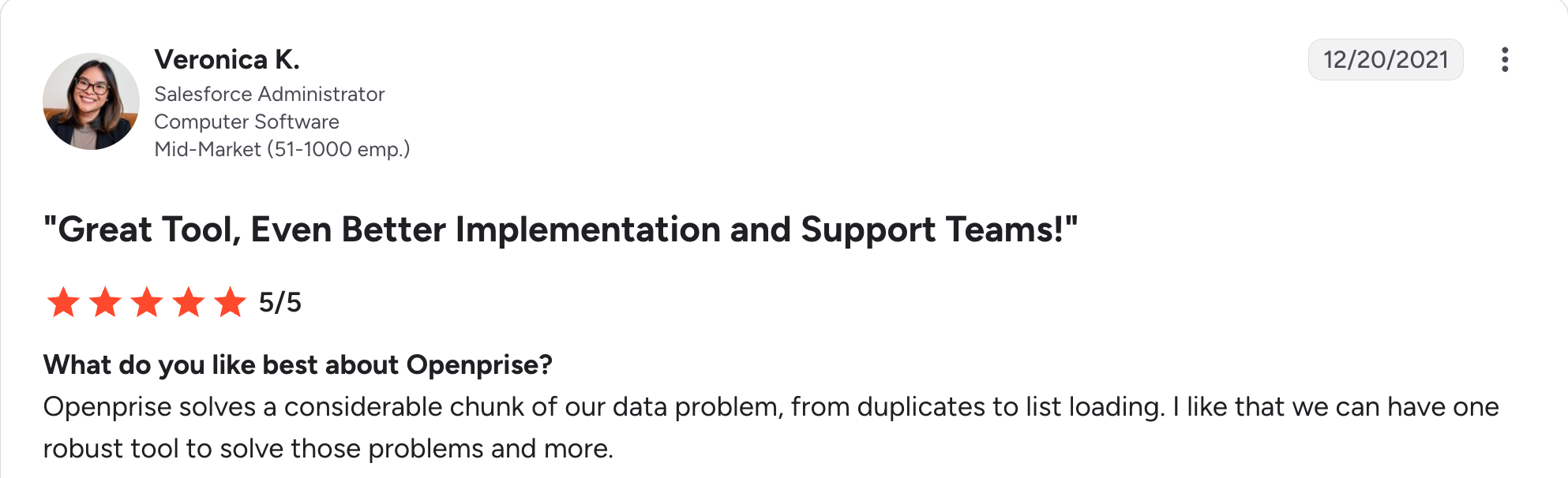
“Openprise solves a considerable chunk of our data problem, from duplicates to list loading.” Veronica K, G2

“The UI can be made better for navigation and configuration.” Verified User, G2
Pricing
Openprise's Professional tier starts around $35,000 annually, based on data volume and integration requirements. Enterprise is custom-priced for the highest security, compliance, and scale needs. Both tiers include a dedicated Customer Success manager. See the Openprise pricing page for a current quote.
Bottom line
Openprise fits when inconsistent data across systems is the problem to solve before scoring works at all. Most teams will never need this level of data operations investment, and Zite's own database handles smaller-scale versions of the same problem.
Which lead scoring software should you choose?
The right pick depends on how much your scoring criteria differ from a vendor's default assumptions, and how much data volume you have to work with. A few questions narrow it fast:
- Do you already have a CRM, or are you choosing scoring and CRM together?
- Does your qualification process fit a standard model, or is it specific enough that you keep working around one?
- Do you have enough historical conversion data for predictive AI scoring to outperform simple rules?
- Is your data clean and centralized, or scattered across several systems?
- Is the budget for this a feature inside a CRM you're already paying for, or a dedicated line item?
Choose Zite or Gumloop if you:
- Keep working around a vendor's scoring assumptions.
- Want the exact criteria that matter to your business, visible and adjustable.
- Need scoring built into the CRM your pipeline runs in (Zite), or as one step among automations you already run (Gumloop).
Choose HubSpot or Zoho CRM if you:
- Want scoring built into a full CRM at a reasonable price.
- Value integration breadth (HubSpot) or affordability (Zoho).
Choose Salesforce or Marketo if you:
- Have enough historical data for predictive scoring to pay off (Salesforce).
- Run complex, multi-stage B2B marketing funnels (Marketo).
Choose ActiveCampaign or Outfunnel if you:
- Qualify leads mainly through email and automation (ActiveCampaign).
- Already have a CRM and just want scoring layered on top (Outfunnel).
Choose Freshsales if you:
- Want AI-assisted scoring at the lowest paid entry point.
Choose Warmly if you:
- Need to score buying intent from visitors who never fill out a form.
Choose Openprise if you:
- Have a complex, multi-system GTM stack that needs standardizing before scoring works at all.
Skip dedicated lead scoring software if you:
- Have low lead volume and a simple sales process a rep can prioritize by judgment alone.
If you're comparing scoring against a wider CRM decision, this guide to the best small-business CRMs is worth reading alongside this list.
Final verdict
For most teams choosing lead scoring software in 2026, Zite is the strongest pick. It's the only tool here that generates a CRM and builds the scoring model around your own criteria. Flexibility and transparency were the two things testing kept coming back to.
HubSpot is the strongest choice if you want scoring built into a shared CRM from day one with no build step. Salesforce wins when you have the historical conversion data to make predictive scoring pay off.
Once leads are scored and converting, this guide to client onboarding software covers the natural next step.
Start building with Zite for free and build the scoring model that matches how you sell.
Frequently asked questions
What is the best lead scoring software?
Zite is the best lead scoring software for most teams. It's the only tool here that builds both the CRM and the scoring model around criteria you define. HubSpot suits shared-CRM scoring with no setup, Salesforce wins for predictive scoring at scale, and Zoho CRM wins on value.
How much does lead scoring software cost?
Lead scoring software ranges from free (Zite) to enterprise quotes starting around $35,000 a year (Openprise). Mid-market tools run $11 to $25 per user a month at their entry tiers, while dedicated tools like Outfunnel scale with contact volume. Zite's free plan has unlimited users, and paid plans start at $25 a month.
Is lead scoring software worth it for a small business?
Lead scoring software is worth it once your team has more incoming leads than reps can prioritize by judgment alone. That happens even to small teams doing marketing-driven lead generation. At low lead volume, a rep can usually prioritize manually without a dedicated scoring tool.
What is the difference between rule-based and predictive lead scoring?
The difference is how the score gets calculated. Rule-based scoring assigns points for criteria you define, like company size or a pricing page visit, and stays transparent about why a lead got its score. Predictive scoring uses AI to learn from historical conversion data instead.
Can I build my own lead scoring system instead of buying software?
Yes, and it's worth considering when your qualification criteria don't fit a vendor's default model. A no-code builder like Zite generates a CRM with a custom scoring field and workflow logic from a description. You define exactly which signals matter instead of configuring around someone else's assumptions.